
How to Grow Herbs in a Dark Kitchen: No Natural Light Needed
Your kitchen has no window. The only light comes from a dim overhead bulb. Yet you dream of snipping fresh basil for your pasta, parsley for your tabbouleh, or mint for your tea—all from your own countertop.
Good news: you don’t need sunlight to grow herbs. With the right setup to grow herbs in a dark kitchen, you can harvest fresh, flavorful greens year-round—even in a windowless apartment. As an urban horticulturist who’s grown herbs in Paris studios with no natural light for over a decade, I’ll show you exactly how to choose the right plants, use affordable LED lights, and create a thriving herb garden in the darkest kitchen.
- Why Grow Herbs in a Dark Kitchen?
- Best Herbs for Low-Light Kitchens
- Light Solutions for No Windows
- Step-by-Step: Set Up Your Dark-Kitchen Herb Garden
- Care Tips for Long-Term Success
- FAQ: Your Questions Answered
Why Grow Herbs in a Dark Kitchen?
Many city apartments have interior kitchens with no windows—especially in older buildings or studio layouts. But herbs don’t require a view. They require light, and light can be artificial.
Benefits of growing herbs in a dark kitchen:
- Constant access: Snip fresh herbs while cooking—no more wilted bunches from the store.
- Year-round harvest: No seasonal limits.
- No pests: Indoor, windowless spaces have fewer aphids and whiteflies.
- Mental boost: Greenery in utilitarian spaces improves mood and reduces stress.
According to the University of Minnesota Extension, full-spectrum LED lights can fully replace sunlight for leafy herbs like basil, parsley, and chives.
Best Herbs for Low-Light Kitchens
Not all herbs need full sun. These thrive with artificial light and minimal natural exposure:
1. Parsley (Petroselinum crispum)
Why it works: Tolerates lower light than most herbs.
Harvest: Snip outer leaves first; regrows continuously.
Tips: Soak seeds in warm water for 24h before planting to speed germination.
2. Chives (Allium schoenoprasum)
Why it works: Grows well under LED; compact and resilient.
Harvest: Cut leaves 2 inches above soil; regrows in 10–14 days.
Companion: Pairs well with parsley in the same tray.
3. Mint (Mentha spp.)
Why it works: Loves moisture and thrives under consistent light.
Warning: Plant alone—it spreads aggressively.
Varieties: Spearmint, chocolate mint, apple mint.
4. Basil (Ocimum basilicum – Compact Varieties)
Why it works: Needs more light, but dwarf varieties like ‘Spicy Globe’ or ‘Greek Basil’ adapt well.
Tip: Use a stronger LED (30W+) and 14 hours of light daily.
Harvest: Pinch tips to encourage bushiness.
5. Thyme (Thymus vulgaris)
Why it works: Woody stems tolerate lower light once established.
Care: Let soil dry between waterings.
Use: Dried or fresh in soups, stews, and roasts.
Light Solutions for No Windows
You don’t need expensive gear. Just the right spectrum and schedule.
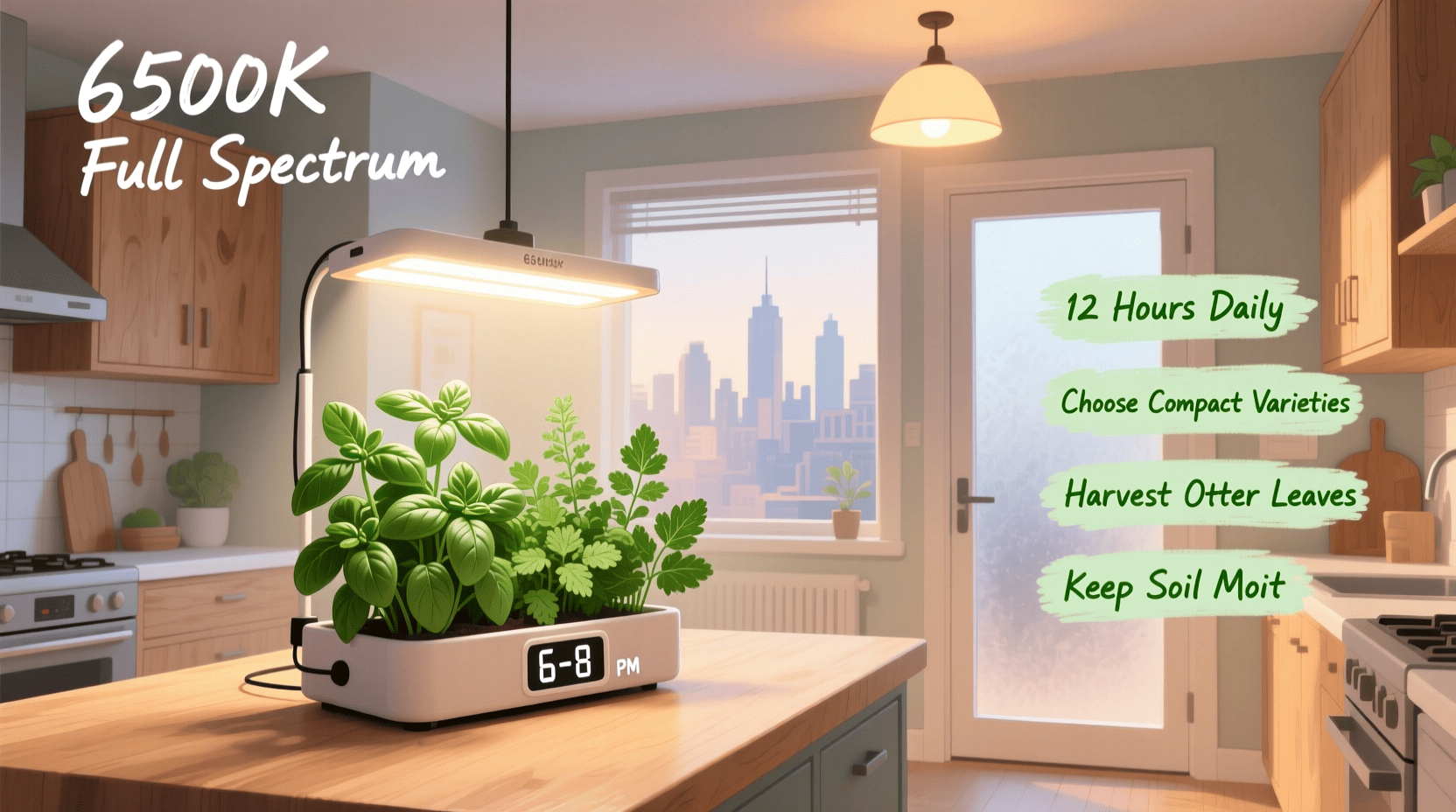
- Full-spectrum LED (6500K): Mimics daylight. Avoid purple-only lights.
- Clip-on or panel lights: Fit on counters or shelves.
- 12–16 hours of light daily: Use a plug-in timer for consistency.
- Position 6–12 inches above plants: Too close = burn; too far = leggy growth.
Cost: A quality 20W LED panel costs ~$40 and lasts 5+ years.
See our guide to the best LED grow lights for small spaces.
Step-by-Step: Set Up Your Dark-Kitchen Herb Garden
Step 1: Choose Your Spot
A countertop, shelf, or even the top of your fridge works. Ensure access to a power outlet.
Step 2: Pick Your System
- Self-watering pots: Great for busy cooks.
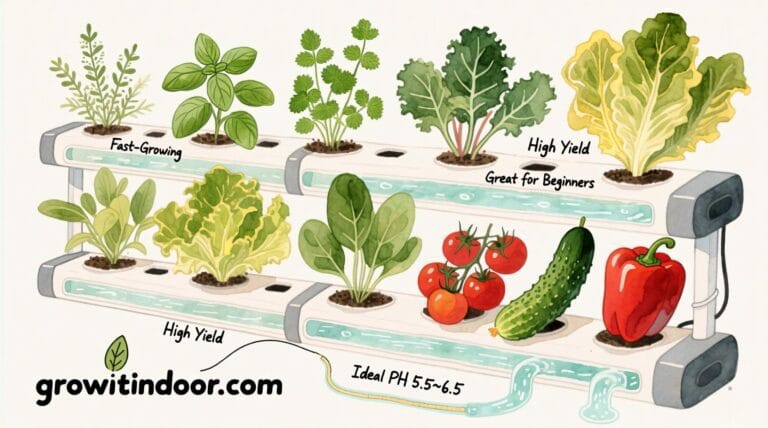
- Hydroponic tray: Faster growth, no soil mess.
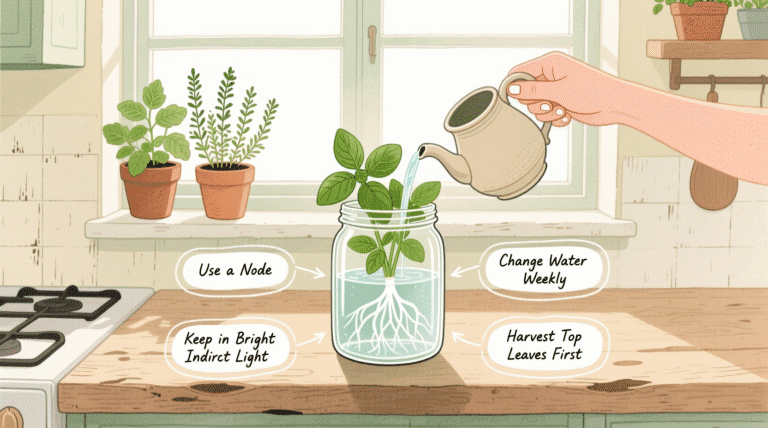
- Recycled jars: Start cuttings in water (basil, mint).
Step 3: Install Your Light
Mount a clip light or panel above your plants. Set a timer for 12 hours/day.
Ideal schedule: 7 AM–7 PM (mimics natural daylight cycle).
Step 4: Plant or Propagate
Start with seeds, seedlings, or kitchen scraps. Label each pot.
Pro tip: Begin with parsley and chives—they’re the most forgiving.
Step 5: Maintain and Harvest
Water when the top inch of soil is dry. Harvest regularly to encourage growth.
See our full guide to growing herbs without sunlight.
Care Tips for Long-Term Success
- Don’t overwater: Dark kitchens dry slower. Always check soil first.
- Clean the lens monthly: Dust reduces light output by up to 30%.
- Rotate pots weekly: Ensures even growth.
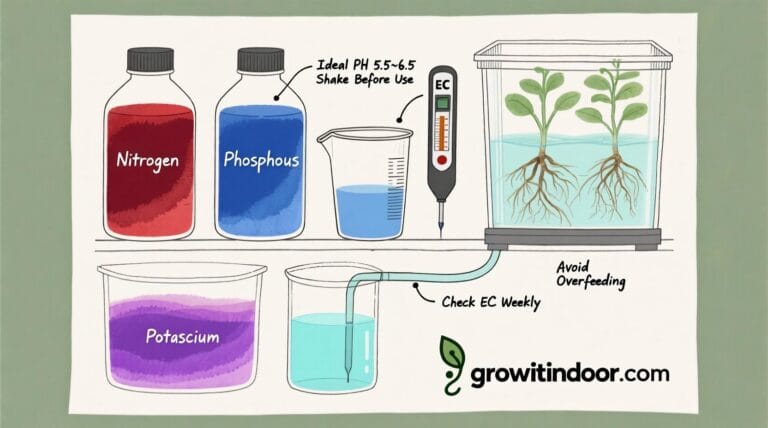
- Fertilize lightly: Use organic liquid fertilizer every 3–4 weeks.
- Watch for legginess: If stems stretch, move light closer or increase hours.
FAQ: Your Questions Answered
Q: Can I use my kitchen ceiling light?
A: No. Standard bulbs lack the red/blue spectrum plants need for photosynthesis.
Q: Will the LED increase my electricity bill?
A: No. A 20W LED running 12h/day costs ~$1–2/month.
Q: Can I grow cilantro in a dark kitchen?
A: Not ideal. Cilantro bolts quickly and needs strong light. Stick to parsley.
Q: Do herbs need darkness?
A: Yes! Give them 6–8 hours of darkness to rest and metabolize.
Q: Can I grow herbs year-round?
A: Yes! Artificial light isn’t affected by seasons.
Q: Are there pet-safe options?
A: Yes: parsley, mint, thyme. Avoid basil if your cat eats large amounts.
Growing herbs in a dark kitchen isn’t about defying nature—it’s about redefining it. When you harvest fresh parsley under a quiet LED, you’re proving that flavor, freshness, and green life can thrive anywhere—even in the heart of the city’s shadows.
If this guide helped you light up your kitchen, share it with a fellow urban cook. And tell us: which herb will you grow first?



Thank you for your sharing. I am worried that I lack creative ideas. It is your article that makes me full of hope. Thank you. But, I have a question, can you help me?
I don’t think the title of your article matches the content lol. Just kidding, mainly because I had some doubts after reading the article. https://jimwaring.com/phoenix-considers-partial-ban-on-homeless-encampments/01/11/2024/#comment-411
I don’t think the title of your article matches the content lol. Just kidding, mainly because I had some doubts after reading the article. https://accounts.binance.info/cs/register-person?ref=OMM3XK51