Why Is My Pothos Not Growing? 7 Fixes That Actually Work
You brought home your pothos with high hopes. It was lush, trailing gracefully from its pot, and promised to thrive on minimal care. But weeks — maybe months — have passed, and nothing has changed. No new leaves. No longer vines. Just the same quiet presence, as if it’s paused in time.
If you’re wondering why your pothos isn’t growing, you’re not alone. This common issue frustrates many indoor gardeners, especially those who chose pothos precisely because it’s supposed to be easy. The good news is that a lack of growth doesn’t mean your plant is dying. In most cases, it’s simply telling you something is off — light, water, nutrients, or even the season.
In this guide, we’ll walk through the seven most common reasons pothos stops growing and how to fix them step by step. Whether your vine lives in a dim corner, survives on irregular watering, or hasn’t been repotted since day one, there’s a gentle solution waiting. Let’s bring your golden pothos back to life — leaf by leaf.
🌱 Why Even “Easy” Plants Stop Growing
Pothos (Epipremnum aureum) is often called the perfect beginner’s plant — resilient, forgiving, and nearly unkillable. But while it can survive neglect, it still needs basic conditions to grow. When those needs aren’t met — even subtly — growth slows or halts entirely.
The truth is, no plant grows continuously year-round. Growth depends on rhythm: light cycles, moisture balance, nutrient availability, and seasonal shifts. A pothos may appear healthy but remain dormant because it lacks enough energy to produce new tissue. According to the Royal Horticultural Society, over 70% of stunted houseplants are suffering not from disease, but from mismatched care — too little light, inconsistent watering, or depleted soil.
So before you assume the worst, take a breath. Your pothos is likely not broken. It’s just waiting for the right signal to move forward.
🔗 Source: Royal Horticultural Society – Houseplant Growth Problems
🔍 Check the Light First
One of the most overlooked causes of stalled growth is insufficient light. While pothos tolerates low light better than most plants, it won’t thrive without at least some indirect brightness. If your plant sits more than six feet from a window, behind furniture, or under closed blinds all day, it may not receive enough energy to grow.
In low-light environments, pothos adapts by slowing down — sometimes stopping completely. You might notice pale leaves, leggy stems stretching toward any source of brightness, or tiny new leaves that never fully unfurl. These are signs your plant is surviving, not thriving.
To help it grow again, move your pothos closer to a bright, indirect light source. South- or east-facing windows are ideal. If natural light is limited, consider using a full-spectrum LED grow light. Set it to run for 12–14 hours a day, placed about 12 inches above the foliage. Over time, you should see greener, stronger growth.
🌿 Internal Link: Perfect Watering Indoor Plants: Avoid Root Rot
💧 Reassess Your Watering Routine
Watering is another key factor that affects growth. Both overwatering and underwatering can cause a pothos to stop producing new leaves. Overwatering leads to root rot, which prevents nutrient uptake, while underwatering forces the plant into survival mode, redirecting energy away from growth.
To find the right balance, use the finger test: gently insert your finger about two to three centimeters into the soil. If it feels dry, it’s time to water. If it’s still damp, wait a few days. For mature pothos, watering every one to two weeks is usually sufficient, especially during winter when evaporation is slower.
When you do water, make sure to soak the soil thoroughly until excess drains out of the bottom. Avoid letting the plant sit in standing water. Bottom watering — placing the pot in a tray of water for 20–30 minutes — is an excellent way to encourage deeper root development and prevent over-saturation.
🌼 Feed It (Just Once)
Even though pothos is known for thriving in poor soil, old potting mix loses essential nutrients after six to twelve months. Without replenishment, your plant may struggle to grow despite otherwise good care.
A simple fix is to give your pothos a light feeding once a year. Use a balanced liquid fertilizer (such as 10-10-10) diluted to half-strength. Apply it in early spring, just as daylight increases and temperatures rise. This gives your plant a gentle boost without overwhelming it.
Avoid fertilizing in fall or winter, as the plant naturally slows down. And never feed a stressed or sickly plant — wait until it shows signs of recovery first.
🪴 Check for Root Bound
If your pothos has lived in the same pot for years, it may have become root-bound. This happens when roots circle tightly around the inside of the container, leaving little room for fresh soil or proper absorption of water and nutrients.
Signs include roots poking through drainage holes, slow drainage after watering, or the plant drying out too quickly. To confirm, gently remove the plant from its pot and inspect the root ball. If it looks like a dense tangle with little soil visible, it’s time to repot.
Choose a new container just one or two inches wider than the current one. Gently loosen the outer roots before placing it in fresh, well-draining soil — a mix of regular potting soil and perlite works well. After repotting, wait two to four weeks before watering again to allow any damaged roots to heal.
✂️ Prune to Promote New Growth
Sometimes, the best way to restart growth is to cut back. Pruning signals the plant to redirect energy into new shoots, encouraging bushier, fuller growth instead of long, sparse vines.
Use clean scissors or pruning shears to trim above a node — the small bump where leaves emerge. Remove any yellowing or leggy stems to improve appearance and health. Don’t worry about cutting too much; pothos responds well to pruning and will soon send out new growth below each cut.
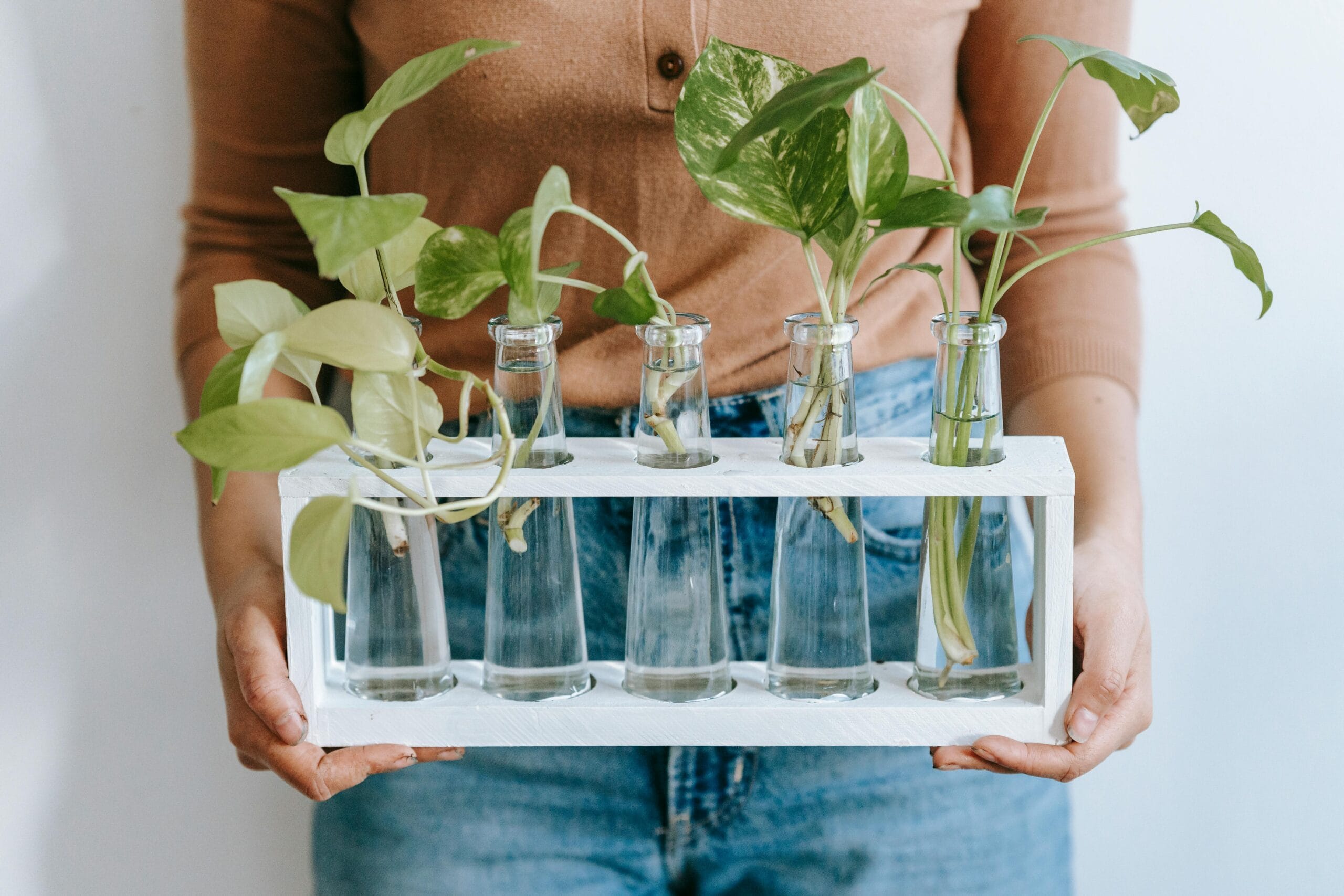
And don’t throw away the clippings. Place them in a jar of water to propagate new plants. Within a few weeks, you’ll have roots forming — free, living proof that your pothos is still full of life.
🌿 Internal Link: Propagate Houseplants in Water: Step-by-Step Guide
🌀 Respect Seasonal Dormancy
Growth doesn’t happen on demand. Like most tropical plants, pothos follows a natural rhythm influenced by light and temperature. During fall and winter, it often enters a period of dormancy, slowing down or pausing growth entirely.
This is normal. Don’t mistake rest for failure. Instead of forcing growth, support your plant through this quiet phase by reducing watering frequency, holding off on fertilizing, and keeping conditions stable. Keep it away from cold drafts and heating vents, and maintain consistent humidity levels.
Come spring, as daylight increases, you’ll likely see new growth return — often stronger and healthier than before.
🐛 Inspect for Hidden Pests
Even the toughest plants can fall victim to pests. Spider mites, mealybugs, and scale insects are common culprits behind stunted growth. They feed on sap, weakening the plant over time.
Check under leaves and along stems for white cottony spots, webbing, or sticky residue. Early detection makes treatment easier. Wipe affected areas with a cotton swab dipped in 70% isopropyl alcohol, then spray with a neem oil solution made from one teaspoon of neem oil, half a teaspoon of mild soap, and one liter of water. Repeat weekly until gone.
Always isolate infected plants to prevent spreading. With care, your pothos can recover fully.
🌿 Internal Link: Common Houseplant Pests: Identify & Eliminate
✅ Final Thought: Slow Growth Isn’t Failure
A pothos that’s not growing isn’t broken — it’s communicating.
It may need more light, a break from watering, or a moment of rest. Healing isn’t always fast. Sometimes, it looks like waiting.
So don’t rush. Don’t panic. Just keep showing up.
Because when that first new leaf finally unfurls?
It’s not just growth.
It’s trust.