How to Save a Dying Houseplant in January: Emergency Care Guide

January is the month of second chances — for us, and for our houseplants.
After the holidays, many indoor gardens show signs of stress: drooping leaves, brown tips, or sudden leaf drop. The air is dry, the light is weak, and routines are out of sync. But before you give up on that fiddle-leaf fig or spider plant, take a breath.
Most dying plants aren’t dead yet — they’re just crying for help.
In this emergency care guide, you’ll learn:
- How to diagnose what’s really wrong
- Step-by-step recovery protocols
- What to do (and not do) in the first 72 hours
- Preventive habits to keep your jungle thriving
This isn’t about perfection. It’s about presence.
Let’s bring your plant back to life.
🚨 Step 1: Diagnose the Real Problem
The first rule of plant rescue: don’t assume it’s dehydration. Overwatering causes more deaths than drought.
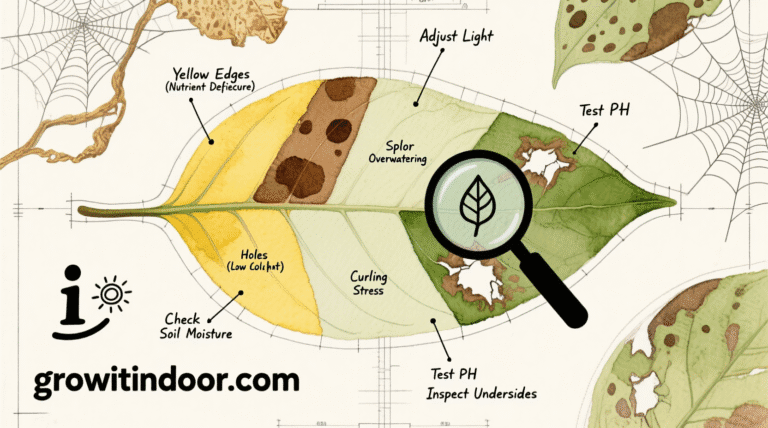
Use this quick symptom checker:
💧 Overwatering
- Yellowing leaves (especially lower ones)
- Mushy, dark stems
- Foul smell from soil
- Soil stays wet for days
👉 Likely culprit: Root rot.
🏜️ Underwatering
- Crispy, brown leaf edges
- Dry, pulling-away soil
- Leaves curling or dropping suddenly
- Pot feels extremely light
👉 Your plant is dehydrated but may still recover.
☁️ Low Humidity
- Brown tips on tropicals (monstera, peace lily)
- Leaf drop after heating season starts
- Dusty or dull foliage
👉 Common in winter with central heating.
🔆 Insufficient Light
- Leggy growth (long stems, wide gaps between leaves)
- Pale or washed-out color
- No new growth for weeks
👉 Especially true for sun-lovers like citrus or basil.
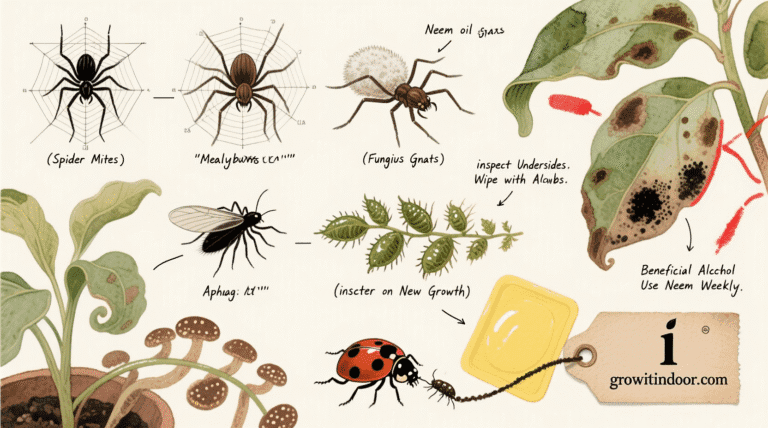
🐛 Pests
- Webbing under leaves → spider mites
- White cottony spots → mealybugs
- Tiny black flies around soil → fungus gnats
👉 Check weekly — early detection saves lives.
🔗 Source: University of Florida IFAS – Houseplant Health Diagnosis
🛠️ Step 2: Emergency First Aid (First 72 Hours)
Once you’ve diagnosed the issue, act fast — but gently.
For Overwatered Plants
- Stop watering immediately.
- Remove the plant from its pot.
- Inspect roots: Healthy = firm, white/green. Rotten = soft, brown/black.
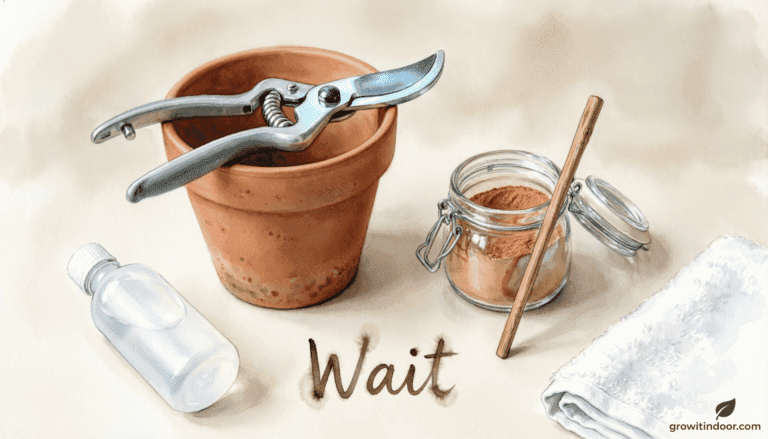
- Trim damaged roots with sterilized scissors.
- Dust cut areas with cinnamon powder (natural antifungal).
- Repot in fresh, well-draining mix (add perlite or orchid bark).
- Wait 1 week before watering again.
📌 Tip: Leave the plant in a bright, warm spot with good airflow.
For Underwatered Plants
- Soak the entire pot in a bucket of water for 20–30 minutes.
- Let excess water drain completely.
- Move away from heat sources (radiators, vents).
- Mist leaves lightly if humidity is low.
- Resume regular watering only when top inch of soil is dry.
💡 Note: Severely dried-out soil can repel water. Try bottom watering until rehydrated.
For Low Humidity Damage
- Wipe down leaves to remove dust.
- Group plants together to create a humid microclimate.
- Add a pebble tray with water under the pot (not touching).
- Mist sparingly — only if room is warm (cold + mist = fungal risk).
- Consider a small humidifier near sensitive plants.
For Light Deficiency
- Move to the brightest window (south-facing ideal).
- Supplement with a full-spectrum LED grow light (12–14 hrs/day).
- Rotate pot weekly for even growth.
- Avoid direct winter sun through glass — it can scorch weakened leaves.
For Pest Infestations
- Isolate the plant immediately.
- Wipe visible pests with cotton swab dipped in 70% isopropyl alcohol.
- Spray with neem oil solution (1 tsp neem + ½ tsp mild soap + 1L water).
- Replace top layer of soil (gnat eggs live there).
- Place yellow sticky traps near soil surface.
🌿 Internal Link: Common Houseplant Pests: How to Identify & Eliminate Them
🔄 Step 3: Stabilize & Monitor (Days 4–14)
Recovery takes time. Don’t expect miracles overnight.
Daily Habits:
- Observe one plant for 60 seconds
- Touch the soil to check moisture
- Remove any fallen leaves
- Wipe one leaf clean
Weekly Check-In:
- Take a photo to track progress
- Test pH if using hydroponics or self-watering pots
- Check for new pests
- Adjust placement if needed
📌 Pro Tip: Talk to your plant. It sounds silly, but speaking raises CO₂ levels slightly — and strengthens your bond.
🌱 Step 4: Prevent Future Emergencies
A healthy plant doesn’t need rescuing.
Adopt these preventive habits:
| Habit | Benefit |
|---|---|
| Water by touch, not calendar | Prevents overwatering |
| Label each plant | Know name, needs, last care date |
| Clean leaves monthly | Boosts photosynthesis |
| Rotate pots weekly | Encourages even growth |
| Use self-watering pots | Ideal for vacations or busy weeks |
🌿 Internal Link: Perfect Watering Indoor Plants: How to Avoid Root Rot
❌ What NOT to Do When Saving a Plant
- Don’t fertilize a stressed plant → adds root burn risk
- Don’t repot during shock → wait until signs of recovery
- Don’t move it too much → pick one stable location
- Don’t panic and overcorrect → gentle steps win
✅ Printable Rescue Checklist
| Task | Done? |
|---|---|
| Diagnose problem (over/underwatering, pests, light) | ☐ |
| Stop harmful action (stop watering / add light) | ☐ |
| Repot if root rot present | ☐ |
| Treat pests with neem or alcohol | ☐ |
| Add humidity if needed | ☐ |
| Wait 7–10 days before next action | ☐ |
| Begin observation routine | ☐ |
📥 Download PDF version → [Link to be added]
💡 Final Thought: A Plant Is Never Just a Plant
When you save a dying houseplant, you’re not just fixing soil or roots.
You’re restoring balance. You’re showing up.
And in doing so, you might just heal a little part of yourself too.
Because healing — whether of a leaf or a heart — begins with attention.
So go gently. Be patient.
And remember: growth often hides beneath silence.