
How to Use Coffee Grounds in Indoor Gardening: Myths vs. Facts
You’ve heard it a hundred times: “Just sprinkle coffee grounds on your plants—they’ll love it!” But then you try it… and your soil grows mold. Your leaves yellow. Your peace lily droops.
The truth? Coffee grounds can help indoor plants—but only if used correctly. Used wrong, they cause more harm than good.
As an urban horticulturist who’s tested coffee grounds on hundreds of houseplants, I’ll cut through the noise and show you exactly what works—and what’s pure myth. No fluff. No folklore. Just science-backed, practical advice that keeps your plants thriving.
- Why Coffee Grounds Are Complicated
- Myths vs. Facts: What Really Happens
- 3 Safe Ways to Use Coffee Grounds Indoors
- Plants That Actually Benefit
- Plants to Keep Away from Coffee Grounds
- FAQ: Your Questions Answered
Why Coffee Grounds Are Complicated
Coffee grounds aren’t fertilizer. They’re an organic material with pros and cons:
- Pros: Rich in nitrogen, improves soil structure, feeds compost microbes.
- Cons: Can compact soil, lower pH (not always good), encourage mold if used fresh or in excess.
According to the University of Minnesota Extension, coffee grounds should be treated as a soil amendment—not a direct top-dressing. And the Royal Horticultural Society warns that fresh grounds can inhibit seed germination and root growth due to residual caffeine and tannins.
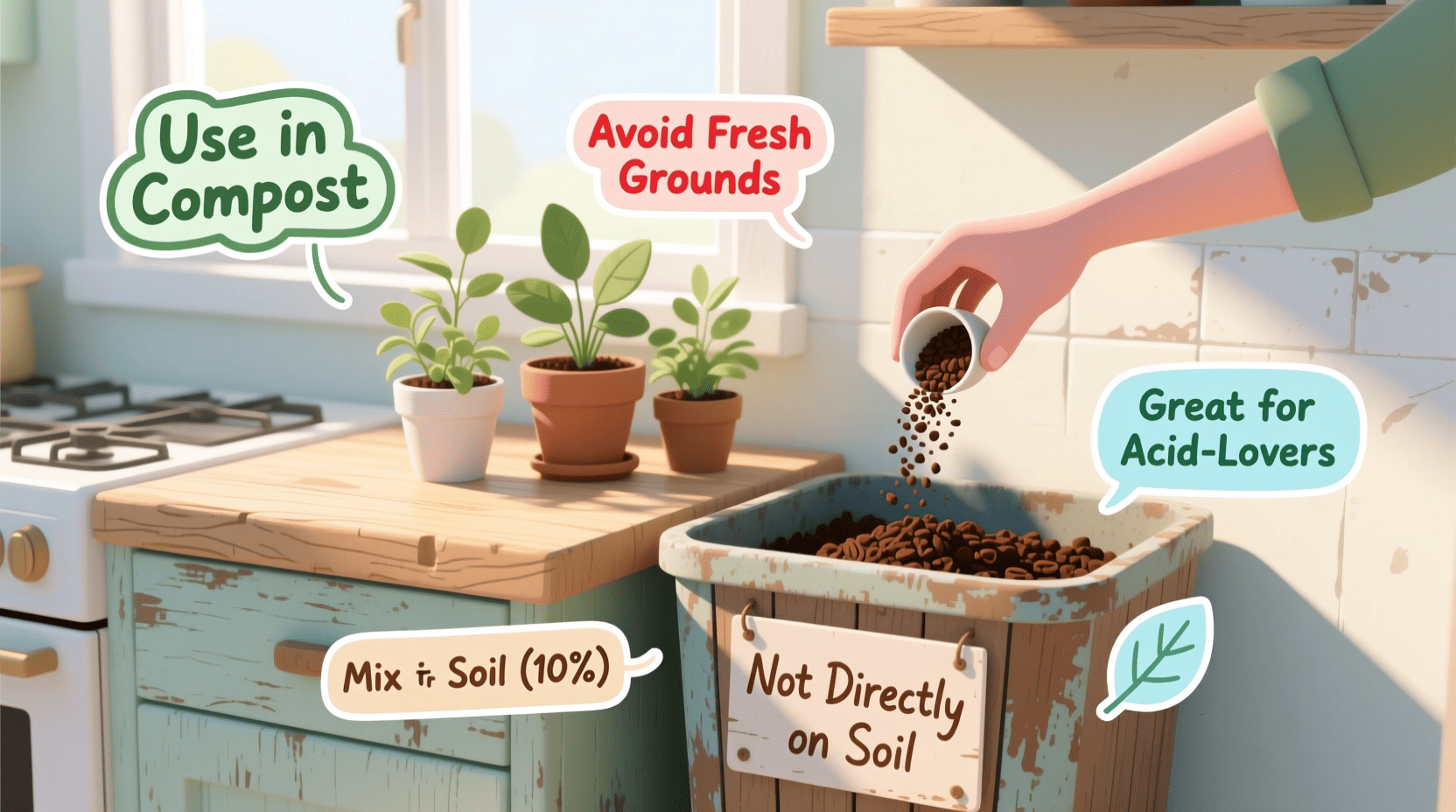
The key? **Never use coffee grounds straight from the pot**. Always compost first or mix sparingly into soil.
Myths vs. Facts: What Really Happens
❌ Myth 1: “Sprinkle grounds on top to fertilize.”
Fact: This creates a dense, water-repellent layer that traps moisture and breeds mold. It also doesn’t release nutrients quickly—nitrogen in coffee grounds is bound in organic form and must decompose first.
❌ Myth 2: “Coffee grounds kill pests like ants and cats.”
Fact: Temporary deterrent at best. Once wet, the smell fades. And it won’t stop determined pests—or curious cats.
❌ Myth 3: “All plants love coffee grounds.”
Fact: Only acid-loving plants benefit. Others (like cacti or spider plants) suffer from pH shifts or poor drainage.
✅ Fact: Coffee grounds improve compost.
They’re a “green” material that balances carbon-rich “browns” (like paper or leaves). In compost, they break down safely and enrich the final product.
✅ Fact: Small amounts mixed into soil help.
Up to 10% coffee grounds in potting mix can improve aeration and nutrient retention—for the right plants.
3 Safe Ways to Use Coffee Grounds Indoors
1. Add to Your Indoor Compost
This is the #1 recommended method.
- Use only **used** (not fresh) grounds.
- Balance with “brown” materials: shredded paper, cardboard, or dry leaves.
- Keep the mix moist but not soggy.
- Turn weekly to prevent mold.
After 4–6 weeks, you’ll have rich compost to mix into your potting soil. Learn how to compost indoors without smell.
2. Mix into Potting Soil (Before Planting)
Never top-dress. Instead:
- Blend 1 part used coffee grounds + 9 parts potting soil.
- Use only for acid-loving plants (see below).
- Avoid if your soil already drains slowly.
This improves structure and slowly releases nitrogen as microbes break it down.
3. Brew “Coffee Ground Tea” (Diluted)
Steep 1 cup of used grounds in 1 gallon of water for 24 hours. Strain and use to water plants once a month.
Warning: Never use undiluted. Always test on one plant first.
Plants That Actually Benefit from Coffee Grounds
These thrive in slightly acidic, nitrogen-rich soil:
- Peace Lily: Loves rich, moist soil.
- Philodendron: Benefits from slow-release nitrogen.
- Chinese Evergreen: Tolerates slight acidity.
- Ferns (e.g., Boston Fern): Prefer acidic, organic-rich soil.
- Monstera: Enjoys nutrient-dense soil—but only in composted form.
Pro tip: Always use composted grounds for these plants—never fresh.
Plants to Keep Away from Coffee Grounds
These are sensitive to pH changes, compaction, or excess moisture:
- Succulents & Cacti: Need fast-draining, alkaline soil.
- Snake Plant: Prefers dry, neutral soil.
- ZZ Plant: Stores water—extra moisture = rot risk.
- Spider Plant: Sensitive to fluoride and pH shifts.
When in doubt, skip it. Most houseplants do fine without coffee grounds.
FAQ: Your Questions Answered
Q: Can I use flavored coffee grounds?
A: No. Oils, sugars, and syrups attract pests and cause mold.
Q: How much is too much?
A: More than 10% of soil volume. Less is more.
Q: Do coffee grounds lower soil pH?
A: Slightly—but not as much as people think. Used grounds are near-neutral (pH 6.5–6.8).
Q: Can I use them to repel fungus gnats?
A: No. Wet grounds attract them. Dry soil and hydrogen peroxide are better solutions.
Q: Are coffee grounds safe for pets?
A: Used grounds are low-risk, but caffeine is toxic to cats/dogs in large amounts. Keep compost covered.
Q: Should I rinse grounds before using?
A: Not necessary—but let them dry to prevent clumping.
Coffee grounds aren’t magic—but they’re not trash either. Used wisely, they close the loop between your kitchen and your garden. But used carelessly, they become a recipe for disaster.
The real secret? **Compost first. Observe your plants. And never let a trend override good judgment.**
If this guide helped you garden smarter, share it with a fellow coffee lover. And tell us: have you tried coffee grounds on your plants?


Can you be more specific about the content of your article? After reading it, I still have some doubts. Hope you can help me. https://www.binance.com/zh-CN/register?ref=WFZUU6SI
I’m curious to find out what blog system you happen to be
working with? I’m experiencing some small security problems with my latest
website and I would like to find something more risk-free.
Do you have any suggestions?
This web site really has all the information I needed concerning this subject and didn’t
know who to ask.
Hi there, I enjoy reading all of your post. I wanted to write a little comment to support you.
Can you be more specific about the content of your article? After reading it, I still have some doubts. Hope you can help me.
Thanks for sharing. I read many of your blog posts, cool, your blog is very good. https://www.binance.info/register?ref=QCGZMHR6