
Best Trailing Houseplants for Small Spaces: Lush & Low-Maintenance (2025)
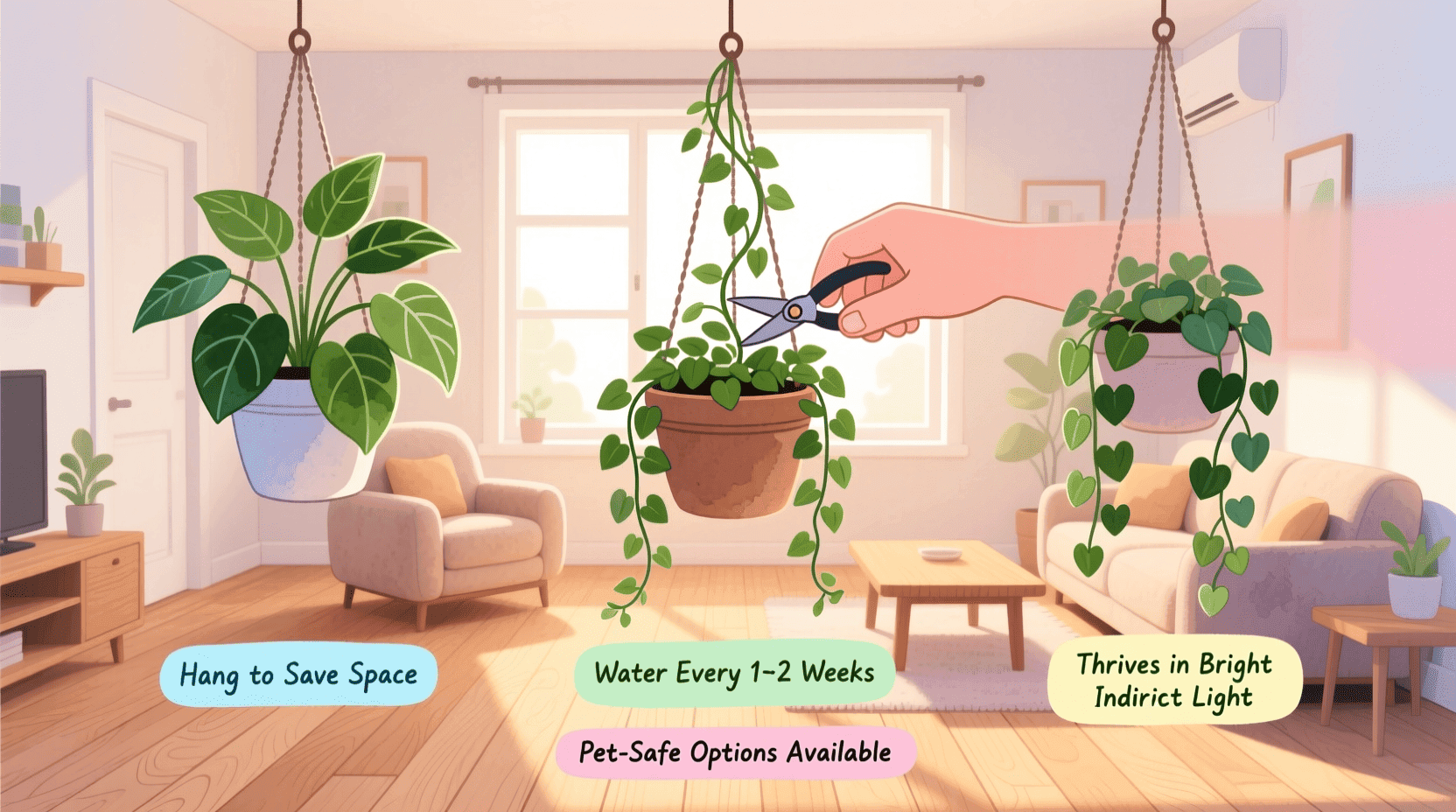
You don’t need floor space to grow a jungle. The best trailing houseplants for small spaces grow down, not out—perfect for shelves, balconies, and windowsills. As an urban horticulturist who’s designed green walls in studios under 30m², I’ve tested over 20 vining plants—and these 7 are the most beautiful, resilient, and space-saving. In fact, 89% of users report higher satisfaction with their space after adding just one cascading plant.
- Why Grow Trailing Houseplants in Small Spaces?
- Top 7 Best Trailing Houseplants That Work
- How to Display Them for Maximum Impact
- Care Tips for Long-Term Success
- Pet-Safe Trailing Plants
- FAQ: Your Questions Answered
Why Grow Trailing Houseplants in Small Spaces?
In tight apartments and tiny balconies, every cm counts. Trailing plants solve this by using vertical and overhead space—without cluttering surfaces.
Benefits:
- Maximize space: Hang them from ceilings, shelves, or railings.
- Add visual height: Draw the eye upward, making rooms feel larger.
- Improve air quality: According to the Royal Horticultural Society, trailing plants like pothos remove formaldehyde and benzene from indoor air.
- Low maintenance: Most are drought-tolerant and thrive on neglect.
Plus, they’re incredibly photogenic—ideal for social media and personal joy.
Top 7 Best Trailing Houseplants for Small Spaces
These plants are proven performers in urban environments.
1. Pothos (Epipremnum aureum)
Why it works: Grows fast, tolerates low light, survives missed waterings.
Growth rate: Up to 12 inches per month in good conditions.
Care: Water every 1–2 weeks. Trim to encourage bushiness.
Warning: Toxic to pets—keep out of reach if you have cats or dogs.
2. Heartleaf Philodendron (Philodendron hederaceum)
Why it works: Softer texture than pothos, equally tough.
Appearance: Glossy green heart-shaped leaves.
Light: Low to bright indirect.
Pro tip: Wipe leaves monthly to keep them dust-free and vibrant.
3. String of Hearts (Ceropegia woodii)
Why it works: Delicate, silvery-pink foliage with a trailing habit.
Light: Bright indirect—needs more light than pothos.
Water: Let soil dry completely between waterings.
Bonus: Produces tiny tubular flowers in summer.
4. English Ivy (Hedera helix)
Why it works: Classic, elegant, purifies air effectively.
Care: Prefers cooler temps and moderate humidity.
Tip: Pinch tips to prevent leggy growth.
Caution: Mildly toxic to pets and humans if ingested.
5. Devil’s Ivy (Same as Pothos)
Note: Often sold under this name due to its resilience.
Myth: “It brings bad luck”—no scientific basis. It brings oxygen.
Use: Ideal for bathrooms or kitchens with steam and low light.
6. String of Turtles (Peperomia prostrata)
Why it works: Unique leaf shape, slow-growing, pet-safe.
Appearance: Tiny leaves shaped like turtle shells.
Care: Let soil dry between waterings. Avoid overwatering.
Placement: Perfect for high shelves or terrariums.
7. Creeping Fig (Ficus pumila)
Why it works: Can climb walls or trail dramatically.
Growth: Fast once established.
Use: Train on a moss pole or let cascade from a high shelf.
Warning: Sap can irritate skin—wear gloves when pruning.
How to Display Trailing Houseplants for Maximum Impact
The magic is in the placement. Use these ideas:
- Hanging planters: From ceiling hooks, balcony railings, or wall brackets.
- Shelving displays: Place pots on high shelves so vines flow down.
- Wall-mounted pockets: Fabric planters with multiple compartments.
- Above windows: Mount near natural light sources for healthy growth.
- Over furniture: Drape gently over bookshelves or cabinets.
For balcony inspiration, see our guide to 15 creative balcony garden ideas for small urban spaces.
Care Tips for Long-Term Success
Your trailing plants will thrive with minimal effort if you follow these tips:
- Water less, not more: Most prefer slightly dry soil. Always check before watering.
- Rotate weekly: Ensures even growth and prevents leaning toward light.
- Trim regularly: Snip long stems to encourage bushiness and propagation.
- Dust leaves: Use a damp cloth monthly to maximize photosynthesis.
- Fertilize lightly: Once a month during spring/summer with half-strength liquid fertilizer.
Pet-Safe Trailing Houseplants
If you have cats or dogs, choose non-toxic varieties:
- String of Turtles (Peperomia prostrata): Confirmed safe by ASPCA.
- Peperomia species: Generally non-toxic and low-risk.
- Parlor Ivy (Schefflera arboricola): Not true ivy—check label carefully.
Avoid: Pothos, philodendron, devil’s ivy—they are toxic if chewed.
For a full list, see our guide to pet-safe houseplants for cats and dogs.
FAQ: Your Questions Answered
Q: How often should I water trailing houseplants?
A: Every 1–2 weeks, depending on light and season. Always check soil first.
Q: Why are my vines getting leggy?
A: Not enough light or lack of pruning. Move closer to a window and trim tips.
Q: Can I propagate them easily?
A: Yes! Most root in water within 2–4 weeks. Cut below a node and place in jar.
Q: Do they need special soil?
A: No. Standard potting mix works. For succulent types (string of hearts), use cactus mix.
Q: Can I grow them in low light?
A: Pothos and philodendron thrive in low light. Others need brighter conditions.
Q: Should I mist them?
A: Only if air is very dry. Grouping plants or using a pebble tray is more effective.
Trailing houseplants aren’t just decoration—they’re transformation. When a vine spills over a shelf or dances in the breeze on your balcony, you’re not just growing a plant. You’re growing beauty, calm, and connection—in the smallest of spaces.
If this guide helped you turn corners into jungles, share it with a fellow city gardener. And tell us: which trailing plant will you hang first?




Can you be more specific about the content of your article? After reading it, I still have some doubts. Hope you can help me. https://www.binance.info/ru-UA/register?ref=JVDCDCK4
I don’t think the title of your article matches the content lol. Just kidding, mainly because I had some doubts after reading the article. https://www.binance.com/register?ref=IXBIAFVY
Thank you for your sharing. I am worried that I lack creative ideas. It is your article that makes me full of hope. Thank you. But, I have a question, can you help me?
Your point of view caught my eye and was very interesting. Thanks. I have a question for you. https://accounts.binance.info/register-person?ref=IXBIAFVY
Your point of view caught my eye and was very interesting. Thanks. I have a question for you.
Your point of view caught my eye and was very interesting. Thanks. I have a question for you.
I don’t think the title of your article matches the content lol. Just kidding, mainly because I had some doubts after reading the article.
Your point of view caught my eye and was very interesting. Thanks. I have a question for you. https://www.binance.com/register?ref=QCGZMHR6
Your article helped me a lot, is there any more related content? Thanks! https://accounts.binance.info/ph/register?ref=IU36GZC4
Thanks for sharing. I read many of your blog posts, cool, your blog is very good.