The Lazy Gardener’s Calendar: 10 Minutes a Week to a Thriving Indoor Garden
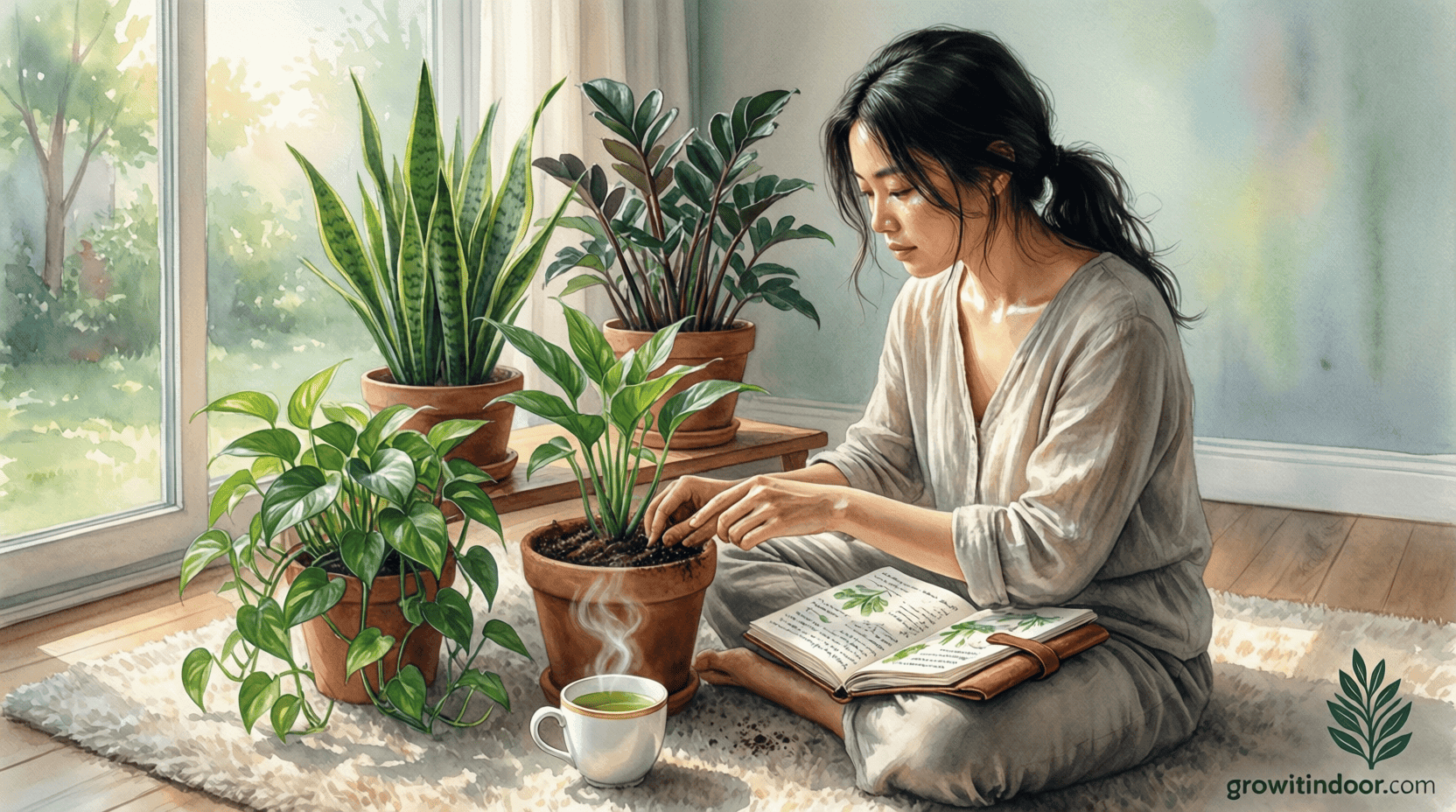
Let’s be honest: life is busy. Between work, family, and the endless to-do list, caring for plants can feel like one more thing on your plate.
But what if you could keep your indoor garden alive — even thriving — with just 10 minutes of care per week?
You don’t need daily watering or perfect light. You just need consistency, simplicity, and a system that fits your rhythm.
Welcome to the lazy gardener’s calendar — a minimalist approach to plant care that respects your time, energy, and peace.
In this guide, you’ll discover:
- A weekly 3-step routine (under 10 minutes)
- How to spot problems before they grow
- Simple habits that prevent overwatering and pests
- Why “lazy” doesn’t mean neglect — it means smart
Because growing green isn’t about perfection.
It’s about showing up — gently.
🌱 Why Being a “Lazy Gardener” Is Actually Smart
The term “lazy” gets a bad rap. But in gardening, working less can mean better results.
Over-caring — constant repotting, fertilizing, misting — stresses plants as much as neglect.
True plant health comes from:
- Observation, not action
- Rhythm, not rules
- Patience, not panic
According to the Royal Horticultural Society, the most successful urban gardeners aren’t those who do the most — but those who create sustainable routines.
So let go of guilt.
Keep it simple.
And let your plants thrive — slowly, quietly, beautifully.
📅 The Weekly 10-Minute Plant Care Routine
Do this once a week, at the same time — every Sunday morning, after coffee, or during a podcast break.
Step 1: Check Soil Moisture (3 minutes)
Stick your finger 2–3 cm into the soil.
- If dry → water lightly
- If damp → wait
💡 Tip: Use a wooden chopstick — if it comes out clean, no need to water.
🌿 Internal Link: Perfect Watering Indoor Plants: Avoid Root Rot
Step 2: Rotate & Observe (5 minutes)
Turn each pot 90° so all sides get light.
Then ask:
- Any new growth?
- Yellow or brown leaves?
- Dust buildup?
- Signs of pests (webbing, spots)?
Take notes in a journal or voice memo.
📌 Bonus: Say hello to your plants. Talking raises CO₂ slightly — good for photosynthesis.
Step 3: Clean Leaves & Saucers (2 minutes)
Use a soft microfiber cloth to wipe dust off large leaves.
Empty saucers under pots — standing water attracts fungus gnats.
That’s it.
Total time: 10 minutes.
No stress. No mess. Just presence.
🛠️ Pro Tips for the Truly Time-Crunched
Even if 10 minutes feels too much, try these:
| Habit | Time | Benefit |
|---|---|---|
| Pair care with a habit | 1 min | Water while brushing teeth |
| Use self-watering pots | 0 min | Reservoir lasts 2–3 weeks |
| Set monthly reminders | 10 sec | Phone alert: “Check plants” |
| Group plants together | 0 min | Creates humid microclimate |
📌 Example: Place your snake plant next to the ZZ plant and pothos — they all prefer low light and infrequent water.
❌ What Not to Do
- Don’t fertilize in winter → plants grow too slowly to use nutrients
- Don’t repot without reason → only when roots peek through drainage holes
- Don’t mist in cold rooms → increases fungal risk
- Don’t panic over one yellow leaf → natural shedding happens
✅ Printable Lazy Gardener’s Weekly Checklist
| Task | Done? |
|---|---|
| Check soil moisture | ☐ |
| Water if needed | ☐ |
| Rotate all pots | ☐ |
| Look for new growth or issues | ☐ |
| Wipe leaves | ☐ |
| Empty saucers | ☐ |
| Smile at your jungle | ☐ |
📥 Download PDF version → [Link to be added]
💡 Final Thought: Less Is More
You don’t need to be an expert to grow green.
You just need to show up — consistently, kindly, quietly.
Because the best garden isn’t the one that looks perfect on Instagram.
It’s the one that still exists six months later.
So this year, let go of pressure.
Be gloriously, intentionally lazy.
And let your plants — and your peace — grow in their own time.