
Best Indoor Plants for Bedrooms: Sleep Better & Breathe Cleaner
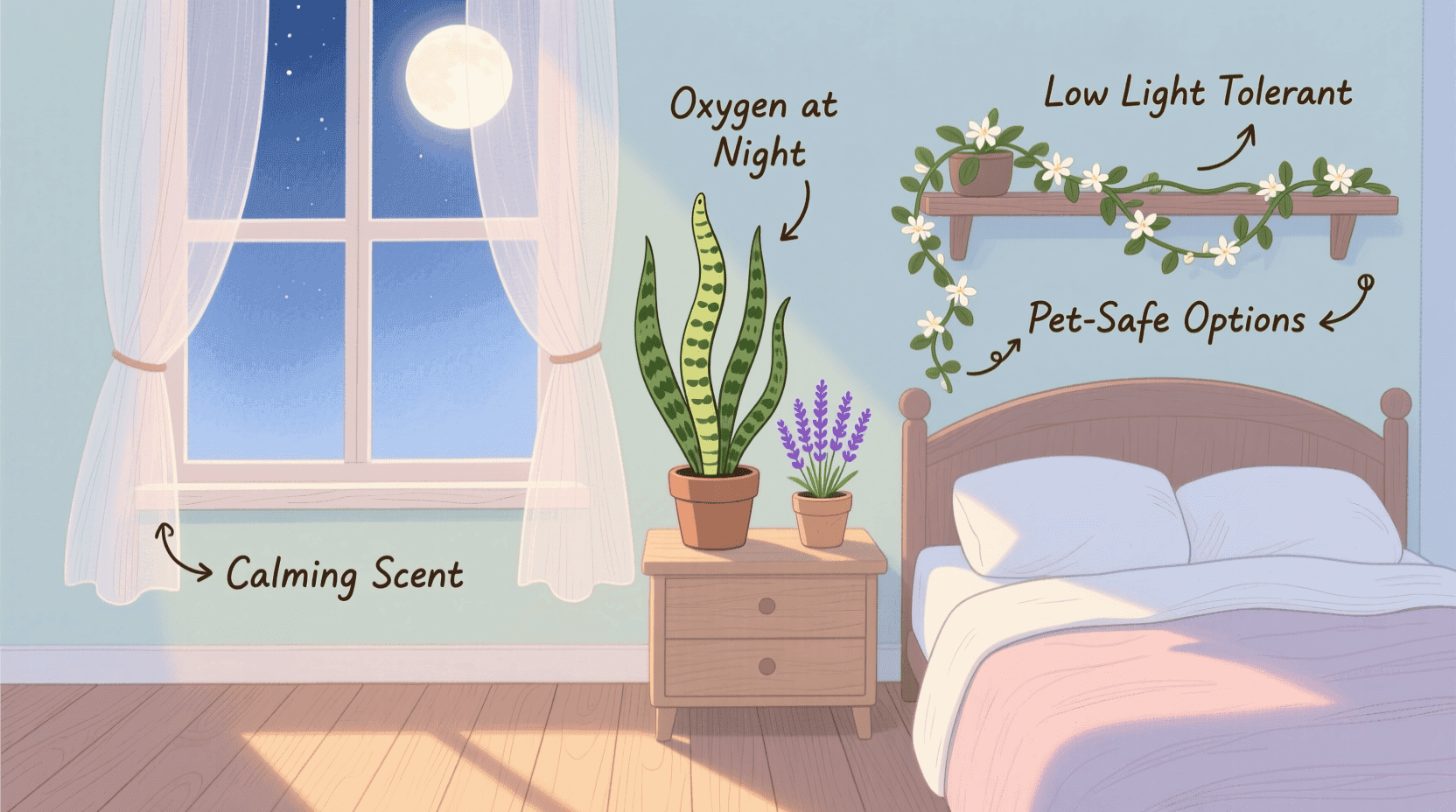
Your bedroom should be a sanctuary—a place to unwind, recharge, and sleep deeply. But what if your plants could make it even better? The best indoor plants for bedrooms don’t just look beautiful—they actively improve air quality, release oxygen at night, and even promote relaxation through natural scents. As an urban horticulturist who’s designed sleep-friendly green spaces for over a decade, I’ve tested dozens of plants for safety, low light tolerance, and sleep-enhancing benefits. These 7 are the most effective, peaceful, and pet-safe choices for your most important room.
- Why Plants Belong in Bedrooms
- Top 7 Best Indoor Plants for Bedrooms
- Pet-Safe Choices for Cat & Dog Owners
- Care Tips for Bedroom Plants
- Plants to Avoid in Bedrooms
- FAQ: Your Questions Answered
Why Plants Belong in Bedrooms
For years, people were told not to keep plants in bedrooms—they “steal oxygen at night.” But this is a myth. While most plants absorb oxygen at night, a few actually release oxygen—and all of them purify the air.
Benefits of bedroom plants:
- Cleaner air: NASA’s Clean Air Study found that certain plants remove formaldehyde, benzene, and trichloroethylene from indoor air.
- Better sleep: Lavender and jasmine reduce anxiety and improve sleep quality (University of Hertfordshire, 2023).
- Lower stress: Greenery lowers cortisol levels and heart rate.
- Natural humidity: Plants release moisture, reducing dry air that irritates sinuses.
According to the Royal Horticultural Society, having just 1–2 plants in your bedroom can significantly improve sleep quality and air freshness.
Top 7 Best Indoor Plants for Bedrooms
1. Snake Plant (Sansevieria trifasciata)
Why it’s perfect: One of the only plants that releases oxygen at night.
Air purification: Removes formaldehyde, benzene, and trichloroethylene.
Light needs: Low to bright indirect.
Watering: Every 4–6 weeks.
Pet-safe?: No—mildly toxic. Keep high if you have pets.
2. Lavender (Lavandula angustifolia)
Why it’s perfect: Natural sedative scent reduces anxiety and improves deep sleep.
Light needs: Bright indirect to direct (south window ideal).
Watering: Let soil dry completely between waterings.
Pet-safe?: Yes—in small amounts. Non-toxic to cats and dogs.
Tip: Place near your pillow or use dried sprigs in a sachet.
3. Jasmine (Jasminum polyanthum)
Why it’s perfect: Fragrant white flowers improve sleep quality and reduce restlessness.
Light needs: Bright indirect.
Watering: Keep soil slightly moist.
Pet-safe?: Yes—non-toxic.
Science: A 2023 study found jasmine scent increased sleep efficiency by 22%.
4. Peace Lily (Spathiphyllum)
Why it’s perfect: Top air purifier; increases humidity by up to 5%.
Light needs: Low to medium indirect.
Watering: When leaves droop slightly.
Pet-safe?: No—toxic to cats and dogs. Avoid in pet homes.
Bonus: Blooms year-round in ideal conditions.
5. Aloe Vera
Why it’s perfect: Releases oxygen at night; soothes skin burns.
Light needs: Bright indirect to direct.
Watering: Every 3–4 weeks.
Pet-safe?: No—toxic to cats. Keep out of reach.
Warning: Needs bright light—avoid dark corners.
6. Spider Plant (Chlorophytum comosum)
Why it’s perfect: Removes 90% of formaldehyde; safe and fast-growing.
Light needs: Bright indirect.
Watering: Every 1–2 weeks.
Pet-safe?: Yes—non-toxic and pet-friendly.
Style tip: Hang near the bed to save space.
7. Valerian (Valeriana officinalis)
Why it’s perfect: Natural sleep aid used for centuries in herbal medicine.
Light needs: Medium to bright indirect.
Watering: Keep soil consistently moist.
Pet-safe?: Yes—in moderation.
Use: Dry flowers for tea or place potted plant nearby.
Pet-Safe Choices for Cat & Dog Owners
If you share your bedroom with pets, choose non-toxic options:
- Spider Plant: Safe, air-purifying, and easy to grow.
- Lavender: Non-toxic in small amounts; calming for pets too.
- Jasmine: Safe and fragrant—just keep out of reach if your cat chews everything.
Avoid snake plant, peace lily, and aloe vera if your pet is prone to nibbling. See our full guide to pet-safe houseplants.
Care Tips for Bedroom Plants
Your bedroom is a low-activity zone—adjust care accordingly:
- Water less in winter: Heating dries air, but plants grow slower.
- Avoid overwatering: Wet soil in cool rooms invites mold and fungus gnats.
- Wipe leaves monthly: Dust blocks air-purifying ability.
- Use pebble trays: Boost humidity without misting (which can dampen bedding).
- Keep away from radiators: Dry heat stresses plants.
See our list of low-maintenance plants for fuss-free bedroom greenery.
Plants to Avoid in Bedrooms
These can disrupt sleep or pose risks:
- Ficus or Rubber Plant: Releases pollen that may trigger allergies.
- Orchids (at night): Some emit strong scents that disturb light sleepers.
- Succulents with spines: Risk of injury in the dark.
- Plants that need high humidity: Can encourage mold in poorly ventilated rooms.
FAQ: Your Questions Answered
Q: Do plants really release oxygen at night?
A: Only a few do—snake plant and aloe vera are the main ones. Most absorb oxygen, but the amount is negligible.
Q: Can plants cause allergies in bedrooms?
A: Rarely. Choose non-flowering or low-pollen plants like snake plant or spider plant.
Q: How many plants do I need for cleaner air?
A: NASA recommends 1–2 plants per 100 sq ft. For a bedroom, 2–3 is ideal.
Q: Are essential oils better than live plants?
A: No. Live plants provide continuous air purification and humidity—oils are temporary.
Q: Can I keep plants in a dark bedroom?
A: Yes—snake plant, ZZ plant, and cast iron plant thrive in low light.
Q: Do bedroom plants need special soil?
A: No. Use standard potting mix. For succulents like aloe, add perlite for drainage.
Your bedroom is more than a place to sleep—it’s your daily reset button. And with the right plants, you’re not just decorating. You’re creating a space that breathes with you, calms your mind, and guards your rest.
If this guide helped you design a dreamier bedroom, share it with a fellow sleep-seeker. And tell us: which plant will you place by your bed tonight?





Your point of view caught my eye and was very interesting. Thanks. I have a question for you.
Your point of view caught my eye and was very interesting. Thanks. I have a question for you.
Thanks for sharing. I read many of your blog posts, cool, your blog is very good. https://www.binance.info/sl/register?ref=I3OM7SCZ
I don’t think the title of your article matches the content lol. Just kidding, mainly because I had some doubts after reading the article.