
How to Water Your Indoor Plants Perfectly to Avoid Root Rot
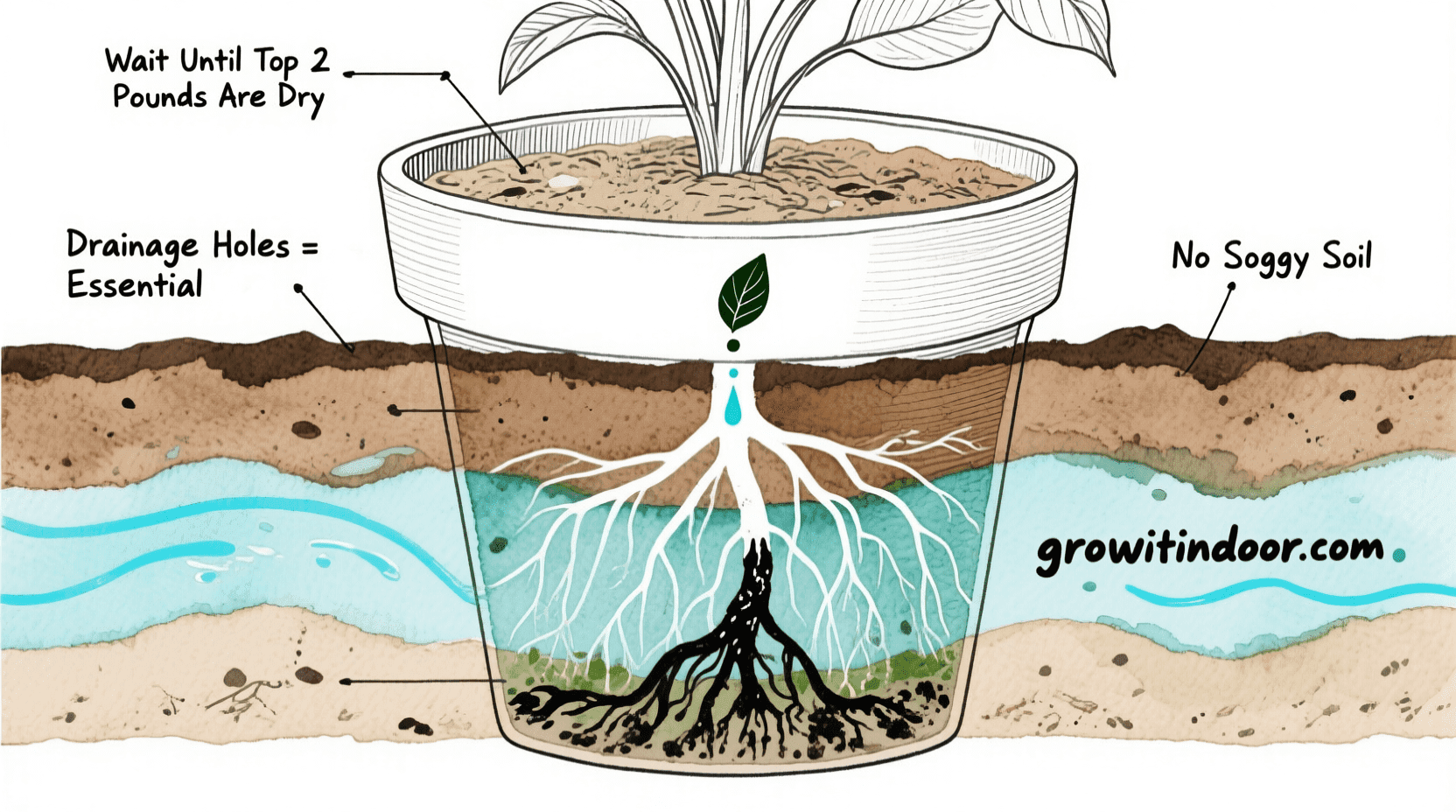
You water your monstera every Sunday without fail. It’s part of your routine—like brushing your teeth or making coffee. But despite your consistency, the leaves are yellowing. The soil stays wet for days. And when you gently tug the plant, it wobbles like it’s barely holding on.
The truth? You’re not neglecting your plant. You’re drowning it.
Overwatering is the #1 cause of indoor plant death. And root rot happens silently, underground, long before you see the first warning sign.
In this guide, I’ll show you how to water your indoor plants perfectly—no guesswork, no calendar rules, no more panic. You’ll learn to read your plant’s real needs, choose the right technique, and prevent root rot before it starts.
Because healthy roots mean healthy leaves. And healthy plants mean a healthier, greener home.
📚 Table of Contents
- Why Watering Indoor Plants Is Harder Than You Think
- Signs Your Plant Is Being Overwatered
- The #1 Rule: How to Check If Your Plant Needs Water
- Best Watering Techniques for Every Plant Type
- Does Water Quality Matter?
- Why Drainage Is Non-Negotiable
- 5 Common Watering Mistakes (and How to Fix Them)
- FAQ: Your Top Questions Answered
Why Watering Indoor Plants Is Harder Than You Think
We treat watering like a chore. But plants don’t live on schedules. They live on signals.
The problem with “watering every 7 days” is that it ignores: – The plant’s species (a succulent vs. a fern) – The season (plants drink less in winter) – The light level (more light = more water) – The pot size and material (terracotta dries faster than plastic) – The humidity and temperature
According to the Royal Horticultural Society, the key to healthy indoor plants is not frequency—it’s observation. Water when the plant needs it, not when the calendar says so.
And the best tool for that? Your fingers.
Signs Your Plant Is Being Overwatered
Root rot starts underground. By the time you see symptoms, damage may already be done.
- Yellowing leaves (especially lower ones)
- Wilting despite wet soil
- Mushy, black stems or roots
- Soil that smells sour or rotten
- Slow or no growth
- Fungus gnats (they thrive in wet soil)
If you notice these signs, stop watering immediately and check the roots. Healthy roots are firm and white. Rotten ones are black, slimy, and break easily.
The #1 Rule: How to Check If Your Plant Needs Water
Forget the calendar. Use the **finger test**:
- Stick your finger into the soil up to the first knuckle (about 2–3 cm).
- If it feels dry, it’s time to water.
- If it’s damp, wait 2–3 days and check again.
For deeper pots, use a wooden chopstick or skewer. Insert it into the soil, wait 10 minutes, then pull it out. If it comes out clean and dry, water. If it’s damp, wait.
This simple method prevents 90% of overwatering cases.
Best Watering Techniques for Every Plant Type
Not all plants want to be watered the same way. Here’s how to do it right:
1. Top Watering (Most Common)
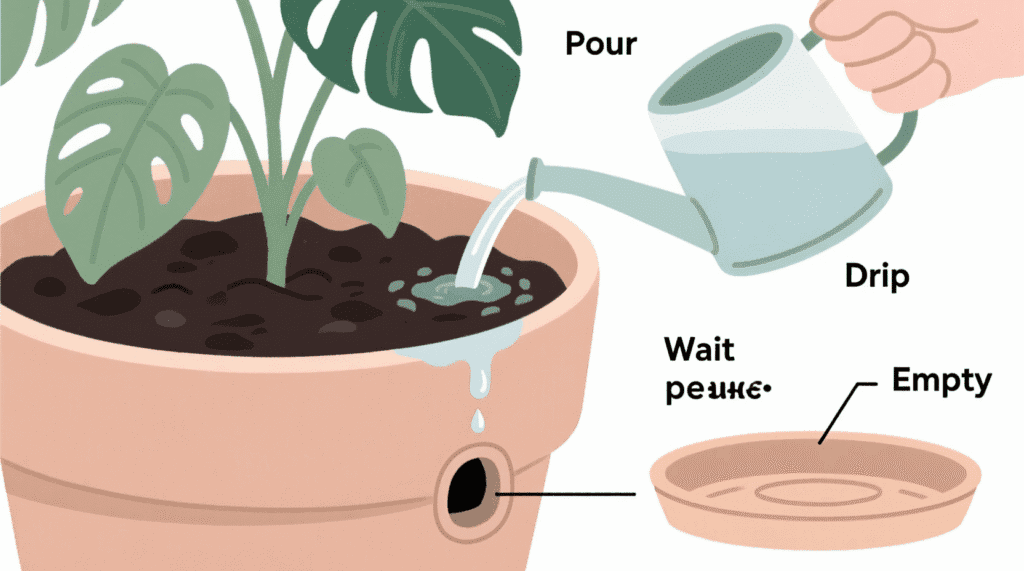
Pour water slowly over the soil until it runs out the drainage holes. Wait 10 minutes, then empty the saucer. Ideal for most houseplants: pothos, monstera, peace lily.
2. Bottom Watering (Great for Sensitive Plants)
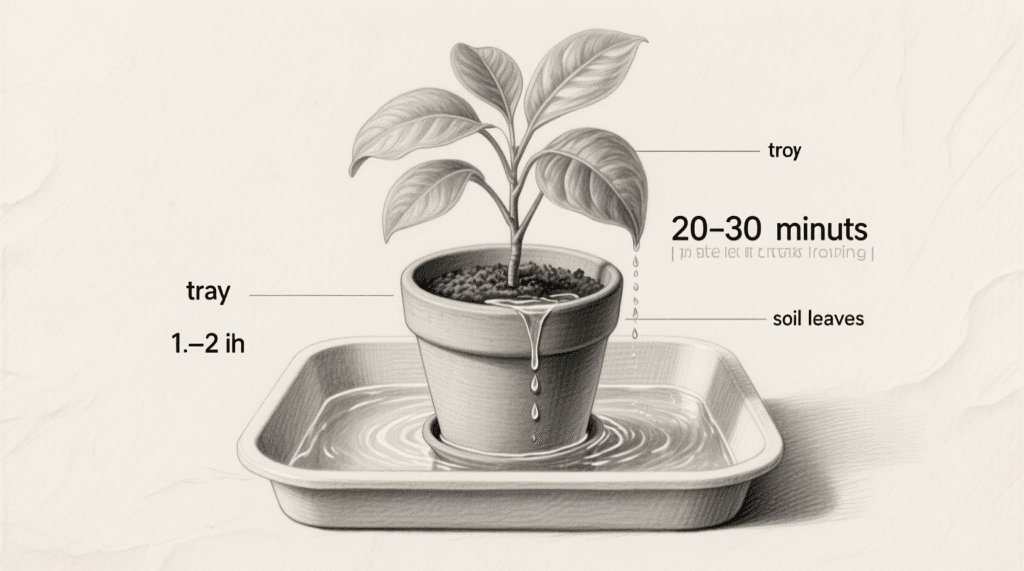
Place the pot in a tray of water (1–2 inches deep). Let it soak for 20–30 minutes. Remove and drain. Prevents water from touching leaves—perfect for African violets and cyclamen.
3. Soak and Dry (For Succulents & Cacti)
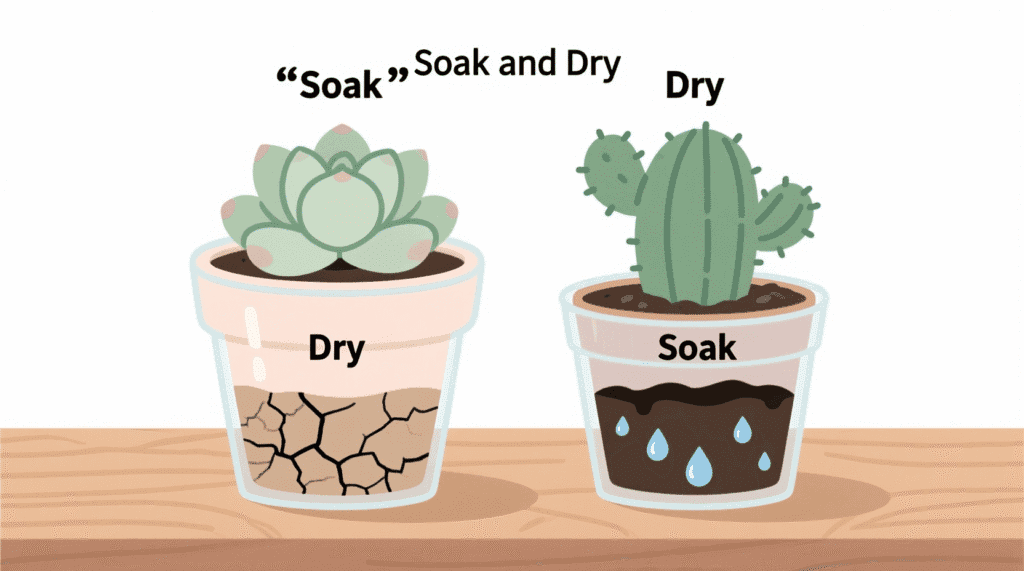
Water deeply until the soil is saturated. Then let it dry completely before watering again. Mimics natural desert rain cycles.
4. Misting (For Humidity-Lovers)
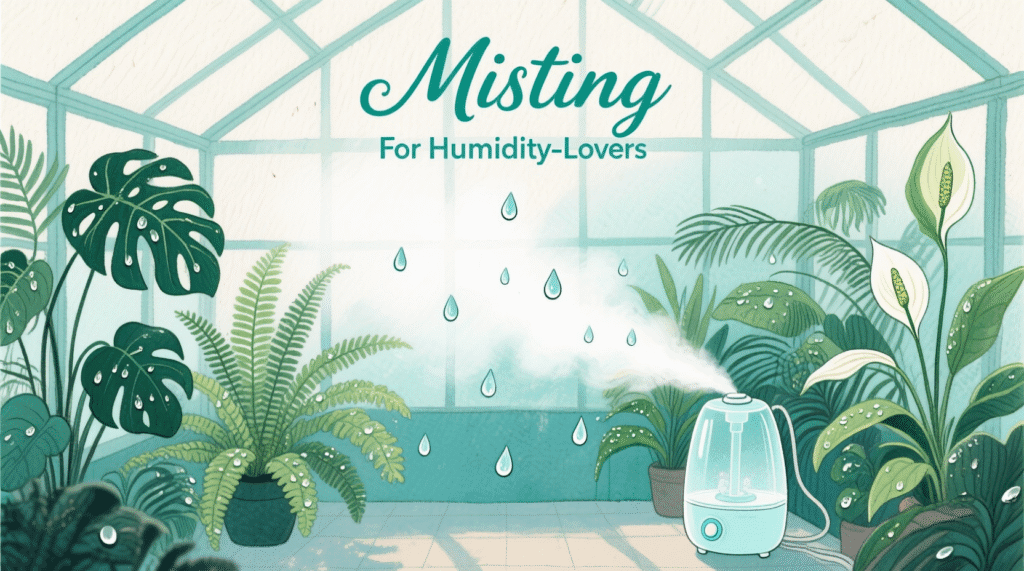
Not a substitute for watering, but a supplement. Mist ferns, calatheas, and orchids daily to boost humidity.
5. Self-Watering Pots (For Busy Urbanites)
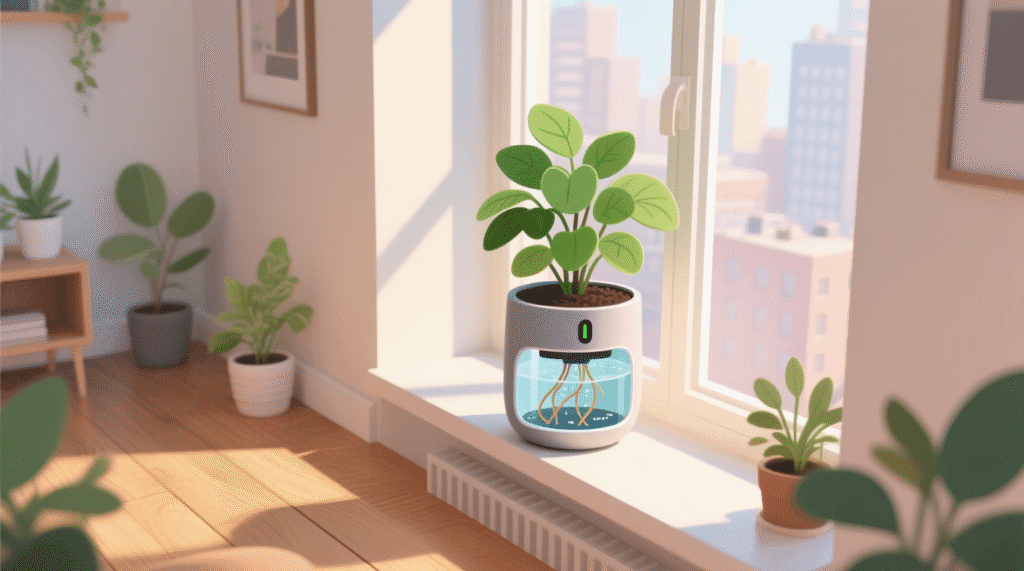
These pots have a built-in reservoir. The plant drinks as needed. Great for travelers or forgetful waterers.
💡 Pro tip: Always use room-temperature water. Cold water shocks roots.
Does Water Quality Matter?
Yes. Tap water often contains chlorine, fluoride, and minerals that build up in soil over time.
- Chlorine: Evaporates if you let water sit 24h before using.
- Fluoride: Causes brown leaf tips in sensitive plants (e.g., spider plants).
- Hard water: Leaves white crust on soil. Use filtered or rainwater when possible.
For best results, use filtered, distilled, or rainwater—especially for tropical plants.
Why Drainage Is Non-Negotiable
No drainage = root rot waiting to happen.
- Always use pots with drainage holes.
- If you love a pot without holes, use it as a cache pot (inner pot with holes).
- Never let your plant sit in water for more than 30 minutes.
Drainage saves lives—plant lives.
5 Common Watering Mistakes (and How to Fix Them)
- Mistake 1: Watering on a schedule → Fix: Use the finger test.
- Mistake 2: Using pots without drainage → Fix: Add holes or use a liner.
- Mistake 3: Overwatering in winter → Fix: Plants grow slower—water less.
- Mistake 4: Pouring water on leaves → Fix: Water the soil, not the foliage.
- Mistake 5: Ignoring humidity → Fix: Group plants, use pebble trays, or add a humidifier.
According to the NASA Clean Air Study, healthy indoor plants improve air quality and reduce stress—but only if they’re not stressed by poor care.
FAQ: Your Top Questions Answered
Q: How often should I water my houseplants?
R: It depends. Use the finger test. Most plants need water every 7–14 days in summer, 2–4 weeks in winter.
Q: Can I save a plant with root rot?
R: Yes, if you act fast. Remove rotten roots, repot in fresh soil, and let it dry out.
Q: Should I mist my plants every day?
R: Only if humidity is low. Misting helps, but a humidifier is more effective.
Q: Is tap water safe for plants?
R: For most, yes—but let it sit 24h to remove chlorine. Avoid softened water.
Q: Can I use a watering can with a long spout?
R: Yes! It helps target the soil and avoid leaves.
Q: Do self-watering pots prevent root rot?
R: Not always. They can overwater if not monitored. Check soil moisture weekly.
Q: How do I know if I’ve watered enough?
R: Water until it drains out the bottom. That means the entire root ball is moist.
Watering isn’t just a task. It’s a relationship. When you learn to listen to your plant, you stop guessing—and start growing. 🌿💧

Thank you for your sharing. I am worried that I lack creative ideas. It is your article that makes me full of hope. Thank you. But, I have a question, can you help me? https://accounts.binance.info/kz/register-person?ref=K8NFKJBQ
Can you be more specific about the content of your article? After reading it, I still have some doubts. Hope you can help me.
Your article helped me a lot, is there any more related content? Thanks!
Your article helped me a lot, is there any more related content? Thanks!
Your article helped me a lot, is there any more related content? Thanks! https://accounts.binance.com/register-person?ref=IXBIAFVY
Thank you for your sharing. I am worried that I lack creative ideas. It is your article that makes me full of hope. Thank you. But, I have a question, can you help me?
Your article helped me a lot, is there any more related content? Thanks!
Thanks for sharing. I read many of your blog posts, cool, your blog is very good.
I don’t think the title of your article matches the content lol. Just kidding, mainly because I had some doubts after reading the article.