Pet-Safe Plant Swap: How to Refresh Your Collection Safely
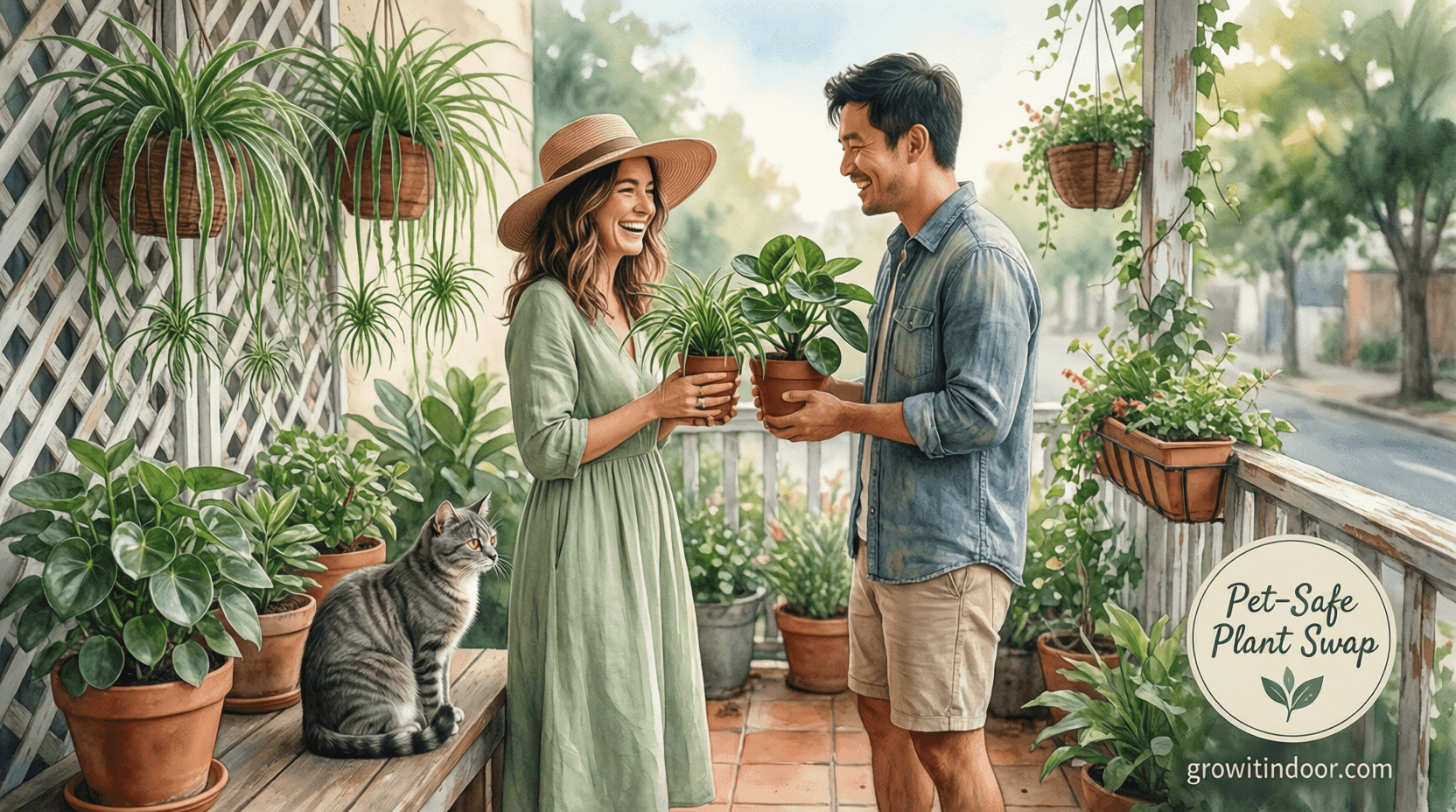
Every year, we look for ways to refresh our homes — new colors, new layouts, new plants. But if you live with cats or dogs, adding greenery can feel risky.
What if your pet nibbles a leaf? What if the plant is toxic?
Instead of playing guessing games, why not swap responsibly? A pet-safe plant swap lets you trade, gift, or adopt houseplants without putting your furry family in danger.
In this guide, you’ll discover:
- The safest plants to swap (and which to avoid)
- How to organize a local or online exchange
- Care tags and labels you can print and share
- Why plant swapping builds community and confidence
Let’s grow greener — together — without worry.
🐾 Why a Pet-Safe Plant Swap Makes Sense
Many plant lovers hesitate to expand their collection because they’re unsure about toxicity. According to the ASPCA, over 100,000 pets are treated annually for plant ingestion — often from common houseplants like pothos, peace lily, or ZZ plant.
But here’s the good news: many beautiful, non-toxic options exist — and most thrive indoors.
A plant swap isn’t just about getting something new — it’s about:
- Rehoming a plant that’s outgrown its space
- Sharing cuttings from your favorite low-maintenance greens
- Building trust within your neighborhood or online group
And when every plant is labeled “safe,” everyone breathes easier.
🔗 Source: ASPCA – Non-Toxic Plants List
🌱 Top 8 Pet-Safe Plants Perfect for Swapping
These are healthy, easy to propagate, and completely non-toxic to cats and dogs:
1. Spider Plant (Chlorophytum comosum)
- Produces “pups” freely
- Thrives in bright indirect light
- Loves to trail from shelves
2. Parlor Palm (Chamaedorea elegans)
- One of the few safe palms
- Slow-growing, elegant form
- Prefers humidity but tolerates dry air
3. Peperomia (Various Species)
- Compact, thick leaves
- Low water needs
- Comes in many textures and colors
4. Rabbit’s Foot Fern (Davallia fejeensis)
- Fuzzy rhizomes look like toys (but are safe)
- Grows well in hanging baskets
- Needs consistent moisture
5. Calathea / Maranta (Prayer Plants)
- Leaves fold at night — mesmerizing
- Safe if lightly chewed
- Prefers warm, humid spots
6. Burro’s Tail (Sedum morganianum)
- Trailing succulent with plump leaves
- Non-toxic (unlike jade or aloe)
- Hang high — stems break easily
7. Boston Fern (Nephrolepis exaltata)
- Lush and airy
- Tolerates occasional pet curiosity
- Mist regularly for best results
8. Swedish Ivy (Plectranthus australis)
- Fast-growing trailing vine
- Great for beginners
- Pinch tips to keep bushy
🌿 Internal Link: Pet-Safe Houseplants: Non-Toxic Plants for Cats & Dogs
🔄 How to Organize a Pet-Safe Plant Swap
Whether in person or online, follow these steps:
Step 1: Invite Participants
Use social media, Nextdoor, or WhatsApp groups. Title:
👉 “Pet-Safe Plant Swap – All Plants Must Be Non-Toxic!”
Step 2: Set Clear Rules
- Only pet-safe species allowed
- No mystery plants without ID
- Bring cuttings in water or small pots
Step 3: Label Everything
Create simple tags:
Name: Spider Plant
Safe for Pets: ✅ Yes
Light: Bright Indirect
Water: Every 1–2 Weeks
From: Sarah 🌿
Print them on recycled paper or use chalkboard tags.
Step 4: Include Care Cards
Offer a mini-printable card with basic care tips — great for first-time owners.
Step 5: Share Propagation Tips
Encourage gifting cuttings in jars of water — no need to wait for full plants.
📌 Bonus: Add seeds like wheatgrass — safe and fun for pets to nibble.
💡 Creative Ways to Make It Special
- Host a “Bring a Cutting, Take a Plant” event in your building
- Create a free little plant library (like a Little Free Library)
- Pair each plant with a handwritten note: “This one survived my vacation — I think you two will be happy.”
- Use reusable fabric wraps instead of plastic bags
❌ Plants to Avoid in Any Swap
Even if labeled “low risk,” avoid exchanging:
- Snake Plant (mildly toxic)
- ZZ Plant (toxic if ingested)
- Pothos (irritating to mouth and stomach)
- Peace Lily (toxic to cats)
When in doubt, check the ASPCA database before accepting or giving.
✅ Final Thought: Kindness That Grows
A plant swap is more than a trade.
It’s an act of trust. Of kindness. Of shared joy.
It says: I see you. I know you want to grow green — safely.
So this year, don’t just refresh your collection.
Refresh your connections.
Because the most beautiful gardens aren’t grown alone.
They’re passed from hand to hand — gently, safely, lovingly.