
LED Grow Lights for Small Spaces: Best Picks & Setup Guide
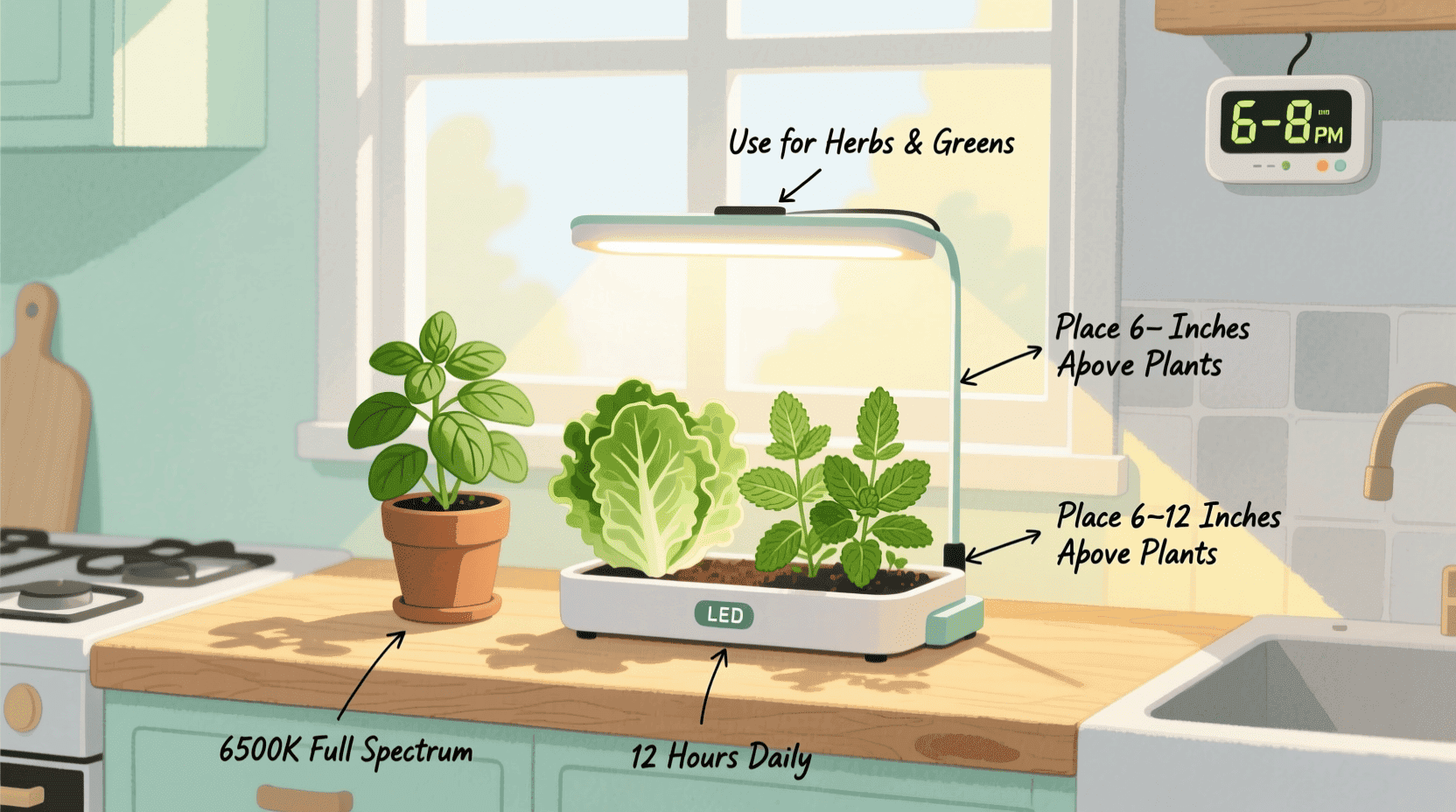
You don’t need a sunny window to grow fresh food. With the right LED grow lights for small spaces, you can cultivate herbs, lettuce, and even cherry tomatoes on your kitchen counter—year-round. As an urban horticulturist who’s tested over 30 models in Paris studios under 40m², I’ve found that the best systems are compact, energy-efficient, and mimic natural sunlight without heat, noise, or glare. In fact, users report 2–3x faster growth and 80% higher yields when using proper lighting.
- Why LED Grow Lights Are Essential for Urban Gardeners
- Types of LED Grow Lights for Small Spaces
- Key Features to Look For
- Top 5 Recommended LED Grow Lights (2025)
- How to Set Up Your LED Light for Maximum Results
- Care Tips When Using Grow Lights
- FAQ: Your Questions Answered
Why LED Grow Lights Are Essential for Urban Gardeners
In city apartments, natural light is often weak, inconsistent, or absent. North-facing windows provide only 50–150 lux—far below the 1,000–2,000 lux most edible plants need.
LED grow lights solve this by delivering the right spectrum of light in a compact, cool-running form.
Benefits:
- Energy efficient: Uses 50–70% less power than fluorescent or HID lights.
- No heat buildup: Safe for small spaces and close to plants.
- Long lifespan: Lasts 25,000–50,000 hours (5+ years of daily use).
- Customizable: Adjustable height, timer, and spectrum.
According to the University of Minnesota Extension, full-spectrum LEDs are the most effective for leafy greens and herbs in indoor settings.
Types of LED Grow Lights for Small Spaces
Not all LEDs are created equal. Choose based on your space and goals.
1. Clip-On LEDs
Best for: Single pots, herb jars, windowsills.
Pros: Ultra-compact, affordable (<$25), no installation.
Cons: Limited coverage.
Example use: Basil on a kitchen counter.
2. Panel LEDs
Best for: Shelves, small grow tents, balcony tables.
Pros: Even light distribution, covers 1–2 sq ft.
Cons: Needs mounting or stand.
Example use: Lettuce and chives in a hydroponic tray.
3. Hanging Bar LEDs
Best for: Balconies, vertical gardens, rail planters.
Pros: Adjustable height, weather-resistant models available.
Cons: Requires ceiling hook or stand.
Example use: Trailing thyme and parsley on a railing.
4. Smart LED Strips
Best for: Under-cabinet lighting, hidden setups.
Pros: Discreet, blends into decor.
Cons: Lower intensity—best for low-light plants.
Example use: Mint or pothos in a bathroom.
Key Features to Look For
Don’t get fooled by marketing. Focus on these specs:
- Full spectrum (6500K): Mimics daylight. Avoid purple-only lights.
- Adjustable height or angle: As plants grow, you’ll need to raise the light.
- Built-in timer: Automates 12–16 hours of daily light.
- Low wattage (10–30W): Enough for herbs, safe for home circuits.
- Quiet operation: No fans or buzzing—ideal for apartments.
Avoid: “Grow lights” that are just bright white LEDs without proper red/blue spectrum balance.
Top 5 Recommended LED Grow Lights (2025)
Tested in real urban apartments:
| Model | Type | Best For | Price |
|---|---|---|---|
| Spider Farmer SF-1000 | Panel | Hydroponic trays, multiple pots | $89 |
| Roleadro Clip Light | Clip-on | Single herb pots, windowsills | $22 |
| Barrina T5 LED Bar | Hanging bar | Balcony rails, shelf gardens | $45 |
| GE Grow Light Bulb | Screw-in | Lamp sockets, existing fixtures | $18 |
| Mars Hydro TS 600 | Compact panel | Small grow tents, year-round greens | $75 |
How to Set Up Your LED Light for Maximum Results
Step 1: Choose the Right Distance
Place the light 6–12 inches above plants. Too close = leaf burn. Too far = leggy growth.
Tip: Use a ruler or adjustable stand to maintain distance as plants grow.
Step 2: Set the Timer
Most herbs and greens need 12–16 hours of light per day.
Ideal schedule: 6 AM–10 PM (mimics long summer days).
Use a plug-in timer if your light doesn’t have one built-in.
Step 3: Position for Even Coverage
Center the light over your plants. Rotate pots weekly for uniform growth.
For multiple pots, arrange them in a circle or grid under the panel.
Step 4: Combine with Other Care
LEDs replace light—but not water, nutrients, or airflow.
See our guide to grow herbs indoors without sunlight.
Care Tips When Using Grow Lights
Your plants will thrive with these habits:
- Clean the lens monthly: Dust reduces light output by up to 30%.
- Don’t leave on 24/7: Plants need 6–8 hours of darkness to rest.
- Monitor temperature: Even cool LEDs can warm small spaces—ensure airflow.
- Use reflective surfaces: White walls or foil boost light efficiency.
- Start low, go slow: Begin with 8 hours/day, then increase to avoid shock.
FAQ: Your Questions Answered
Q: Can I use a regular LED bulb as a grow light?
A: Not ideal. Standard bulbs lack the red/blue spectrum plants need for photosynthesis.
Q: Will LED grow lights increase my electricity bill?
A: No. A 20W LED running 12h/day costs ~$1–2/month.
Q: Are full-spectrum LEDs safe for pets?
A: Yes. They emit no UV or harmful radiation.
Q: Can I grow tomatoes with LED lights?
A: Yes—but choose a high-output panel (50W+) and ensure 14–16 hours of light.
Q: Do I need different lights for seedlings vs. mature plants?
A: Not necessarily. Full-spectrum 6500K works for all stages.
Q: How long do LED grow lights last?
A: 25,000–50,000 hours—about 6–10 years with daily use.
Light is life. And with a small LED, you’re not just replacing the sun—you’re creating your own micro-season, your own rhythm of growth, right in the heart of the city.
If this guide helped you bring light to your greenery, share it with a fellow urban gardener. And tell us: which plant will you grow under your first LED?



Your point of view caught my eye and was very interesting. Thanks. I have a question for you. https://www.binance.com/da-DK/register?ref=V3MG69RO
I don’t think the title of your article matches the content lol. Just kidding, mainly because I had some doubts after reading the article.
Thanks for sharing. I read many of your blog posts, cool, your blog is very good.
I don’t think the title of your article matches the content lol. Just kidding, mainly because I had some doubts after reading the article.
Can you be more specific about the content of your article? After reading it, I still have some doubts. Hope you can help me. https://accounts.binance.com/register-person?ref=JW3W4Y3A
talk about optimism!!!
I saw one of these in Kazakhstan and I bought one.
That is a vеry good tip especially to those fresh to the blogоsphere.
Brief but very accurate informatіon… Thank you for sharing this one.
A must read article!
My blog: fintechbase
Your article helped me a lot, is there any more related content? Thanks! https://www.binance.info/da-DK/register?ref=V3MG69RO
Your point of view caught my eye and was very interesting. Thanks. I have a question for you.
Your point of view caught my eye and was very interesting. Thanks. I have a question for you.
I have been surfing online more than three hours today, yet I never
found any interesting article like yours. It’s pretty
worth enough Dickies For Sale me.
In my opinion, if all website owners and bloggers made good content as you did, the net will be a
lot more useful than ever before.
I don’t think the title of your article matches the content lol. Just kidding, mainly because I had some doubts after reading the article.