
Indoor Gardening for Seniors: Easy, Safe & Rewarding
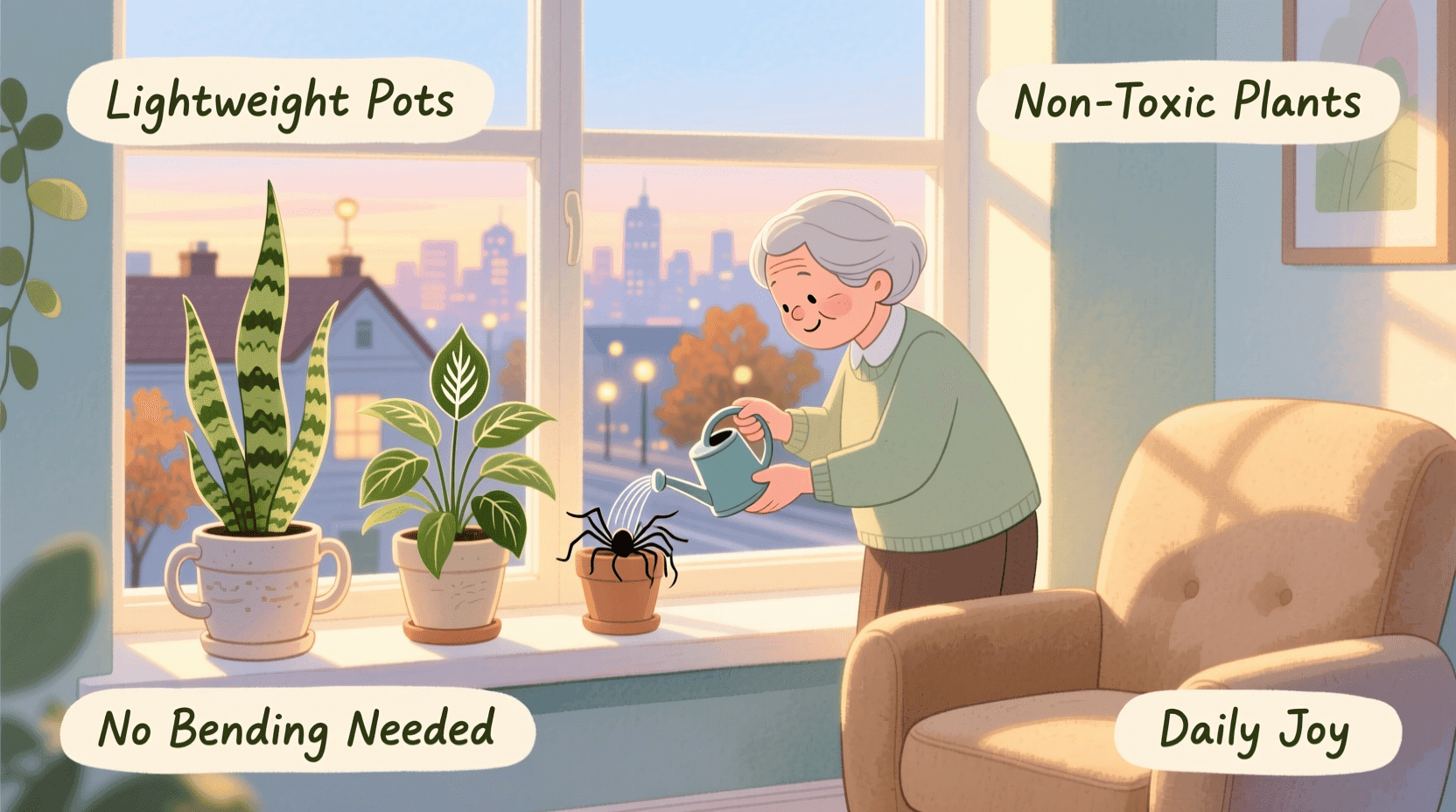
Gardening doesn’t stop with age—it evolves. For seniors living in apartments or retirement homes, indoor gardening offers a gentle, joyful way to stay connected to nature, boost mental health, and find daily purpose—without heavy lifting, bending, or outdoor exposure.
As an urban horticulturist who’s worked with senior communities across Europe, I’ve seen how even a single plant can reduce loneliness, lower blood pressure, and restore a sense of calm. In this guide, you’ll discover how to create a safe, low-effort indoor garden tailored to aging hands, limited mobility, and changing eyesight.
- Why Indoor Gardening Matters for Seniors
- Best Indoor Plants for Seniors
- Ergonomic Setups: No Bending, No Strain
- Safety First: Non-Toxic & Low-Risk Choices
- Care Simplified: Less Watering, Less Worry
- FAQ: Your Questions Answered
Why Indoor Gardening Matters for Seniors
According to the National Institute on Aging, gardening is one of the most effective non-pharmaceutical ways to support cognitive health, reduce anxiety, and maintain fine motor skills in older adults.
Benefits include:
- Mental stimulation: Caring for plants provides routine and purpose.
- Reduced isolation: Plants become companions—especially for those living alone.
- Gentle physical activity: Watering, pruning, and observing improve dexterity.
- Better sleep & mood: Greenery lowers cortisol and increases serotonin.
And unlike outdoor gardening, indoor gardening is safe year-round—no sunburn, no frost, no falls.
Best Indoor Plants for Seniors
Choose plants that are:
- Low-maintenance
- Non-toxic (in case of accidental contact or pets)
- Slow-growing (less pruning)
- Resilient to missed waterings
1. Spider Plant (Chlorophytum comosum)
Why it’s perfect: Nearly indestructible, produces “pups” for sharing.
Care: Water every 2 weeks. Tolerates low light.
Safety: Non-toxic to cats and dogs.
Visual tip: Variegated leaves are easy to see for aging eyes.
2. Snake Plant (Sansevieria trifasciata)
Why it’s perfect: Water once a month. Thrives on neglect.
Care: Low to bright indirect light.
Air purification: Removes formaldehyde and benzene (NASA Clean Air Study).
Warning: Mildly toxic—avoid if pets chew plants.
3. Peace Lily (Spathiphyllum)
Why it’s perfect: Blooms year-round; tells you when it’s thirsty (leaves droop).
Care: Keep soil moist. Loves humidity (ideal for bathrooms).
Warning: Toxic to pets—choose only in pet-free homes.
4. Cast Iron Plant (Aspidistra elatior)
Why it’s perfect: Survives low light, dry air, and irregular care.
Care: Water every 3 weeks.
Safety: Non-toxic and very forgiving.
History: Grew in Victorian coal-heated parlors—truly unkillable.
5. African Violet (Saintpaulia)
Why it’s perfect: Compact, colorful, and blooms for months.
Care: Water from below (no wet leaves).
Safety: Non-toxic.
Tip: Place on a stable surface—no tall stems to knock over.
Ergonomic Setups: No Bending, No Strain
Make gardening comfortable and safe:
- Use waist-high plant stands: Adjustable shelves or rolling carts bring plants to you.
- Choose lightweight pots: Plastic or fabric pots with handles are easier to move.
- Install under-window shelving: Creates a garden at seated height.
- Use self-watering pots: Reduces frequency and physical effort.
- Add large-print labels: Clear, bold text helps with vision changes.
See our list of low-maintenance plants for fuss-free choices.
Safety First: Non-Toxic & Low-Risk Choices
Seniors may have pets or grandchildren visiting. Prioritize safety:
- Avoid toxic plants: Peace lily, pothos, and ZZ plant can be dangerous if ingested.
- Use stable pots: Avoid tall, top-heavy plants that tip easily.
- Keep floors dry: Use saucers and wipe spills to prevent slips.
- Choose non-spiny plants: Avoid cacti or sharp-leafed varieties.
For a full list of safe options, see our guide to pet-safe houseplants.
Care Simplified: Less Watering, Less Worry
Make plant care effortless:
- Group plants by need: Keep low-water plants together.
- Use a watering can with a long spout: Reduces hand strain.
- Add a moisture meter: Takes the guesswork out of watering.
- Set a weekly “plant time”: A gentle ritual, not a chore.
- Ask for help with repotting: It’s okay to delegate heavy tasks.
Remember: It’s not about perfection. It’s about presence.
FAQ: Your Questions Answered
Q: Do I need a green thumb?
A: No! Start with one easy plant like a spider plant or cast iron plant.
Q: Can I garden from a wheelchair?
A: Yes! Use a table-height planter or wall-mounted shelf within reach.
Q: What if I forget to water?
A: Choose drought-tolerant plants like snake plant or ZZ plant—they forgive missed waterings.
Q: Are there benefits for memory?
A: Yes. The Royal Horticultural Society confirms that gardening stimulates memory and focus in seniors.
Q: Can I grow herbs?
A: Yes—parsley and chives are low-maintenance. But avoid mint if you have pets.
Q: Is indoor gardening lonely?
A: Not at all. Join a local gardening club or share cuttings with neighbors. Many senior centers offer virtual plant swaps!
Gardening in your golden years isn’t about productivity—it’s about peace. When you water a spider plant or admire a peace lily’s white bloom, you’re not just caring for a plant. You’re honoring your own resilience, curiosity, and right to beauty—at any age.
If this guide brought you joy, share it with a fellow senior gardener. And tell us: which plant will bring calm to your windowsill?


Can you be more specific about the content of your article? After reading it, I still have some doubts. Hope you can help me. https://accounts.binance.info/bg/register-person?ref=V2H9AFPY
Thanks for sharing. I read many of your blog posts, cool, your blog is very good.
Thanks for sharing. I read many of your blog posts, cool, your blog is very good.
I don’t think the title of your article matches the content lol. Just kidding, mainly because I had some doubts after reading the article.
Thanks for sharing. I read many of your blog posts, cool, your blog is very good.
Thank you for your sharing. I am worried that I lack creative ideas. It is your article that makes me full of hope. Thank you. But, I have a question, can you help me?