Balcony Gardening for Small Spaces – Grow Food & Flowers

Your balcony is more than a storage zone for bikes and folding chairs — it’s a hidden garden waiting to bloom.
Even if you only have 50 square feet of outdoor space, you can grow tomatoes, strawberries, herbs, and flowers — all while improving air quality, reducing stress, and cutting your grocery bill.
In this ultimate 2024 guide, you’ll learn:
- How to assess your balcony’s sun, wind, and weight limits
- The best containers and layouts for small spaces
- 12 creative ideas to maximize every inch
- Seasonal planting tips for year-round harvests
- How to protect plants from extreme weather
Whether you’re a beginner or a seasoned grower, this guide will help you turn your balcony into a thriving urban oasis.
🌞 Why Balcony Gardening Is Worth It
Balconies offer something most indoor spaces don’t: direct sunlight, fresh air, and natural rain.
Benefits of Balcony Gardening:
- More sunlight than most apartments (6+ hours for south-facing)
- Better airflow reduces pests and fungal diseases
- Privacy and beauty — create a peaceful retreat
- Grow your own food — save $20–$50/month on groceries
According to the American Society for Horticultural Science, urban gardening improves mental well-being, reduces stress, and strengthens community ties.
🔗 Source: ASHS – Urban Gardening and Mental Health
📏 Step 1: Assess Your Balcony’s Conditions
Before planting, answer these key questions:
1. Which Direction Does It Face?
| Direction | Sun Exposure | Best For |
|---|---|---|
| South | 6–8 hrs direct sun | Tomatoes, peppers, basil |
| East | 3–5 hrs morning sun | Lettuce, chives, strawberries |
| West | 4–6 hrs hot afternoon sun | Thyme, oregano, marigolds |
| North | Low light (shade) | Pothos, ferns, mint (in pots) |
2. Is It Windy?
High winds can dry out soil and damage plants. Use:
- Bamboo screens
- Acrylic windbreaks
- Tall plants as natural barriers
3. What’s the Weight Limit?
Most balconies support 50–100 lbs per sq ft, but avoid heavy soil-filled containers. Use:
- Fabric grow bags (lightweight)
- Self-watering pots (reduce soil volume)
- Hanging planters (offload floor weight)
🔗 Source: USDA – Urban Gardening Safety Tips
🌱 Step 2: Choose the Right Containers
Space is limited — so choose smart, stackable, and multi-functional planters.
Top 5 Container Types:
- Fabric Grow Bags – breathable, prevent root circling
- Hanging Baskets – save floor space, great for strawberries
- Rail Planters – attach to railing, no floor use
- Stackable Pots – vertical growth in small footprint
- Foldable Garden Tables – double as seating and planting
📌 Pro Tip: Use wheeled plant caddies to move heavy pots easily.
🌿 Step 3: Best Plants for Balcony Gardens
Choose compact, productive, and climate-appropriate plants.
🏆 Top 10 Balcony Plants:
| Plant | Sun Needs | Container Size | Harvest Time |
|---|---|---|---|
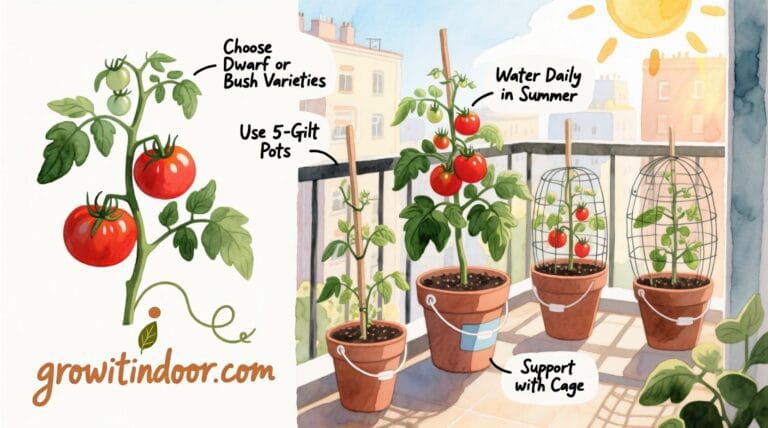
| Cherry Tomatoes | 6–8 hrs | 5-gallon bucket | 60–80 days |
| Strawberries | 6+ hrs | Hanging basket | 60+ days |
| Basil | 6+ hrs | 8–10” pot | 40–60 days |
| Lettuce | 4–6 hrs | 6–8” deep | 30–45 days |
| Chives | 4–6 hrs | 6” pot | 60+ days |
| Peppers (Dwarf) | 6+ hrs | 3–5 gal | 70–90 days |
| Marigolds | 4+ hrs | 6” pot | 50–60 days |
| Mint | 4+ hrs | 8” pot (isolated) | 60+ days |
| Radishes | 4+ hrs | 6” deep | 25–30 days |
| Bush Beans | 6+ hrs | 12” deep | 50–60 days |
🌿 Internal Link: How to Grow Tomatoes on a Balcony – Step-by-Step Guide for Beginners
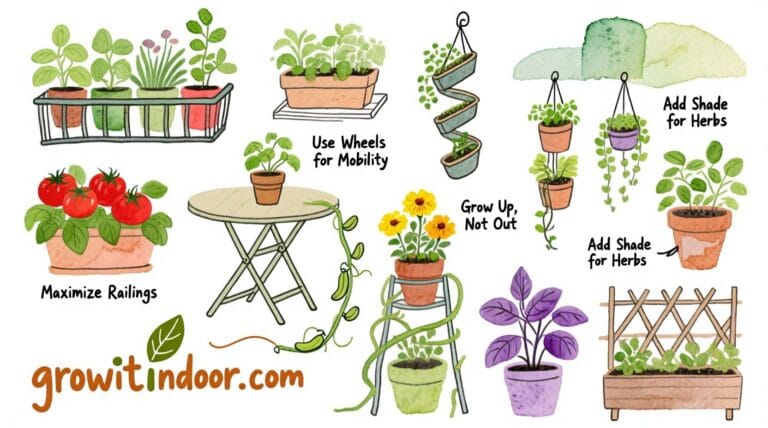
🛠️ Step 4: 12 Space-Saving Ideas for Small Balconies
1. Vertical Trellis for Climbing Plants
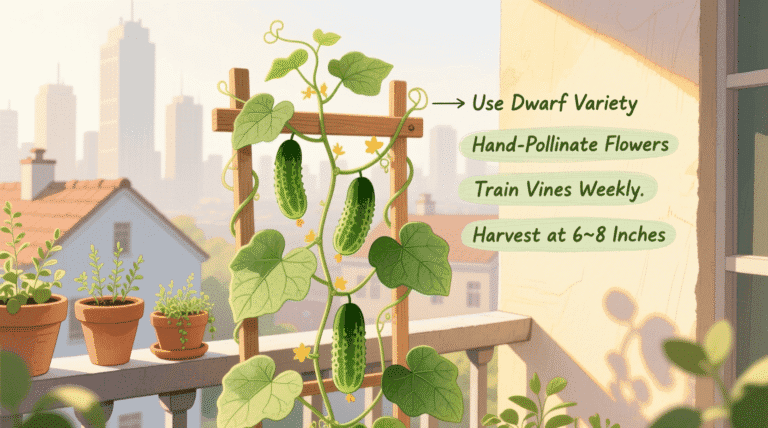
Use a bamboo teepee or metal grid for beans, peas, or cucumbers.
2. Hanging Shoe Organizer
Fill pockets with herbs — saves space and looks unique.
3. Railing Planters
Attach long troughs to the rail — perfect for lettuce or flowers.
4. Foldable Garden Table
Doubles as dining space and grow zone.
5. Tiered Shelving Unit
Create a plant tower with 3–4 shelves.
6. Wall-Mounted Pockets
Felt or fabric pockets for succulents or strawberries.
7. Stackable Garden Towers
Like the “Garden Tower 2” — grows 50 plants in 4 sq ft.
8. Ceiling Hooks for Baskets
Hang trailing plants like nasturtiums or lobelia.
9. Window-Mounted Boxes
Outside-facing for extra growing area.
10. Repurposed Crates
Wooden wine crates make rustic planters.
11. Rotating Lazy Susan
Place herbs on a turntable for easy access.
12. Mini Greenhouse
Use a small pop-up greenhouse to extend the season.
🌿 Internal Link: Vertical Garden for Balcony: 10 Space-Saving Ideas to Grow More in Less Space
🌧️ Step 5: Protect Plants from Weather Extremes
❄️ Cold & Frost
- Use frost cloths or row covers
- Move pots indoors at night
- Group plants together for warmth
☀️ Heat & Sunburn
- Add shade cloth (30–50%)
- Water in the morning
- Use light-colored pots to reflect heat
💨 Wind Damage
- Install acrylic or bamboo windbreaks
- Use heavy pots or anchor planters
- Avoid tall, top-heavy plants
🗓️ Seasonal Balcony Garden Calendar
| Season | What to Plant | Care Tips |
|---|---|---|
| Spring | Lettuce, radishes, chives | Start seeds indoors |
| Summer | Tomatoes, basil, peppers | Water daily, mulch soil |
| Fall | Kale, spinach, marigolds | Use cooler-tolerant varieties |
| Winter | Pansies, herbs (indoors) | Use grow lights if needed |
✅ Final Tips for Success
- Start with 3 easy plants: basil, lettuce, marigolds
- Use self-watering pots for vacations
- Rotate pots weekly for even growth
- Label plants and track harvests
- Join a local gardening group or online forum
🌿 Conclusion
Your balcony is not wasted space — it’s a micro-farm with huge potential. With smart design, the right plants, and a little care, you can grow fresh food, beautiful flowers, and a healthier lifestyle — all in under 100 square feet.
Start small. Grow with confidence. Harvest with pride.