
Article 6 – Nouvelle Année 2026
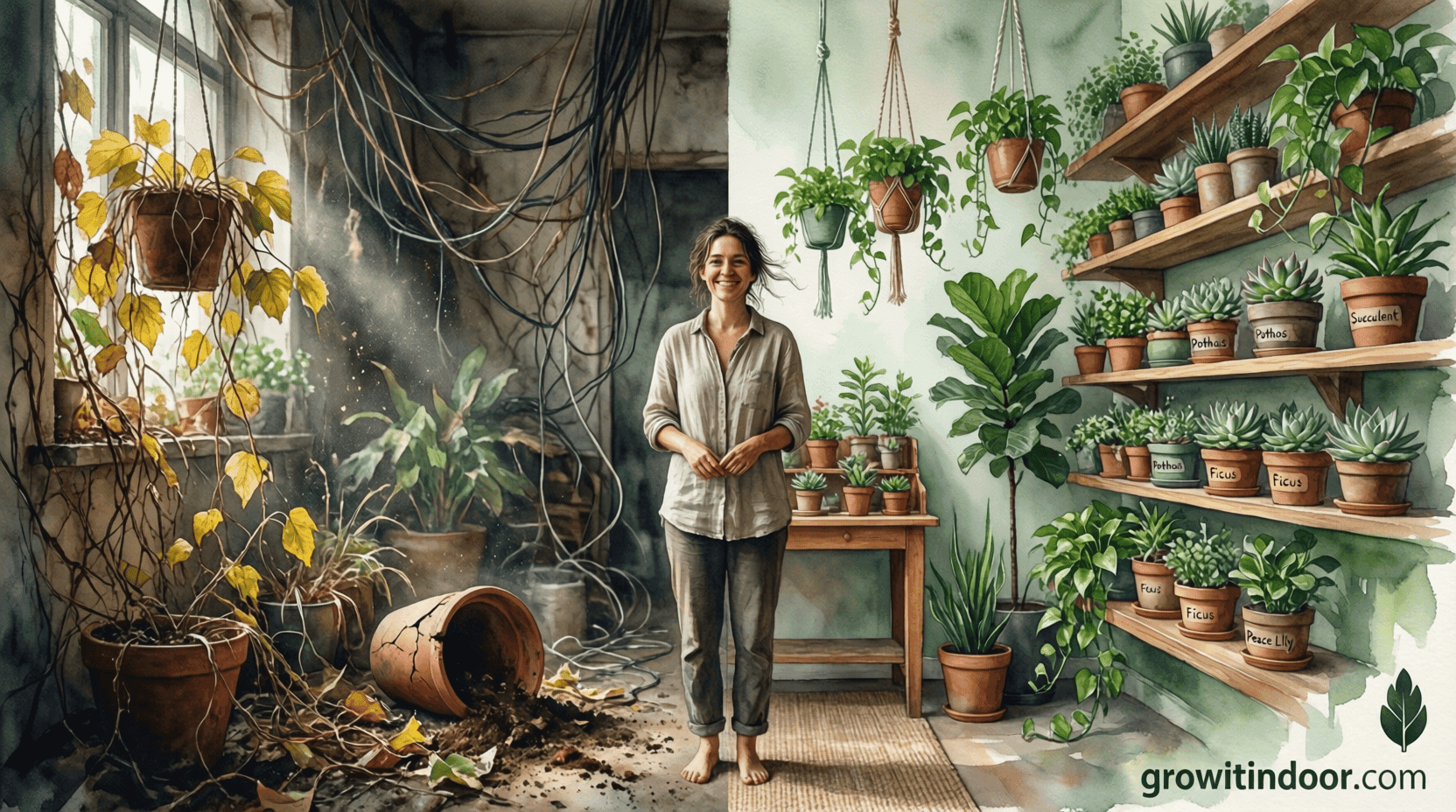
Seed Starting in Small Spaces: Your January Guide to Spring Harvests
January may be cold and dark, but beneath the surface, life is stirring. And for urban gardeners, this quiet month is the perfect time to start something new — from seed.
Starting seeds indoors isn’t just for backyard farmers. With a windowsill, a grow light, or even a shelf above your fridge, you can grow fresh herbs, leafy greens, and vibrant flowers — all in less than 1 square meter.
In this guide, you’ll discover:
- The best plants to start from seed in January
- How to set up a compact seed station (no mess, no fuss)
- A step-by-step timeline for spring harvests
- Tips to avoid common beginner mistakes
No garden? No problem. This year, let your journey begin with a single seed.
🌱 Why Start Seeds Indoors in January?
If you live in a city apartment, outdoor growing starts later — often after frost risk passes in late spring. But by starting seeds indoors now, you give your plants a head start of 4–8 weeks.
That means:
- Earlier harvests of tomatoes, peppers, and basil
- Stronger, more resilient seedlings
- Access to rare or heirloom varieties not found in stores
- A rewarding winter project that connects you to the seasons
According to the National Gardening Association, gardeners who start their own seeds report higher satisfaction and greater success rates than those who buy mature plants.
And for renters or balcony gardeners, it’s one of the most cost-effective ways to grow food.
🔗 Source: National Gardening Association – Seed Starting Trends
📦 Step 1: Gather Your Supplies (Minimal & Affordable)
You don’t need much. Here’s what you actually need:
| Item | Purpose |
|---|---|
| Seed trays or recycled containers | Yogurt cups, egg cartons, or takeout clamshells work fine |
| Seed-starting mix | Light, sterile soil — never use garden soil |
| Seeds | Choose fast-growing, space-efficient varieties |
| Labels & pen | Pencil or waterproof marker |
| Spray bottle | For gentle watering |
| Plastic dome or wrap | To retain moisture (optional) |
| Light source | Sunny south window or LED grow light |
📌 Tip: Use toilet paper rolls as biodegradable pots — plant them directly in larger containers later.
🌼 Step 2: Choose the Right Plants to Start Now
Not every plant should be started in January. Focus on long-season crops that benefit from early indoor growth.
🏆 Best Seeds to Start in January:
| Plant | Days to Germinate | Light Needs | Notes |
|---|---|---|---|
| Tomatoes (dwarf) | 5–10 days | High | Start now for May transplant |
| Peppers (mini bell, chili) | 7–14 days | High | Slow starters — give them time |
| Eggplant | 7–14 days | High | Loves warmth — use heat mat |
| Lettuce (cut-and-come-again) | 7–10 days | Medium | Can grow year-round indoors |
| Basil | 5–10 days | High | Don’t overwater — prone to damping off |
| Cilantro | 7–10 days | Medium | Prefers cooler temps |
| Dill | 7–14 days | High | Attracts beneficial insects later |
📌 Avoid root vegetables like carrots or radishes — they prefer direct sowing.
🌿 Internal Link: Grow Herbs Indoors Without Sunlight – Dark Apartment Guide
🛠️ Step 3: Sow Your Seeds (Simple & Clean)
Follow these steps:
- Fill trays with moistened seed-starting mix (not too wet).
- Plant seeds at the depth recommended on the packet (usually 2x the seed size).
- Label immediately — trust us, you’ll forget.
- Mist gently to settle soil.
- Cover with plastic if needed to keep humidity high.
- Place under light — either bright window or 12–16 hours under LED.
📌 Pro Tip: Keep soil warm (70–75°F). Place trays on top of the fridge or use an affordable heat mat ($15–$20).
☀️ Step 4: Provide Consistent Light
Natural light from a south-facing window works for some seeds — but it’s weak in January.
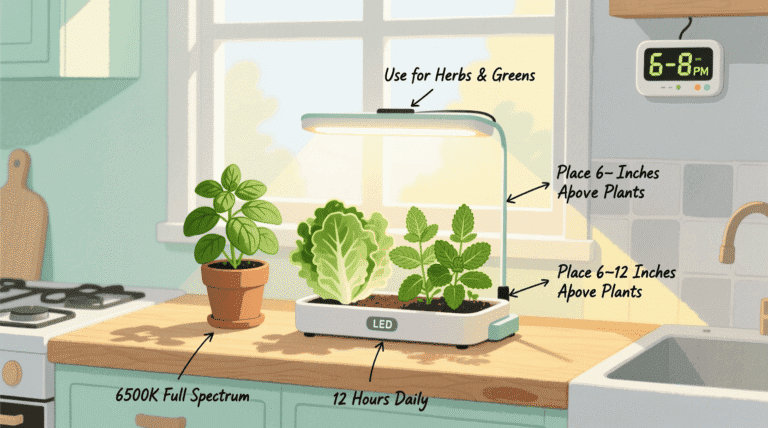
For reliable results, use a full-spectrum LED grow light:
- Hang 6 inches above seedlings
- Set on timer for 14–16 hours/day
- Adjust height as plants grow
Recommended budget option: Roleadro 6000K LED Strip Light (~$25 for 24”)
📌 Watch for leggy growth — if stems stretch tall and thin, they need more light.
💧 Step 5: Water with Care
Overwatering kills more seedlings than drought.
Keep soil moist but not soggy:
- Water from below: place tray in shallow water for 10 minutes
- Use room-temperature water
- Never let seedlings sit in standing water
💡 Signs of trouble:
- Fuzzy white mold → reduce moisture, increase airflow
- Collapsed stems → damping-off disease (use clean soil next time)
- Pale leaves → nutrient deficiency (add diluted liquid fertilizer after true leaves appear)
🔄 Step 6: Thin, Transplant, and Harden Off
Once seedlings have 2–3 true leaves (not the first tiny sprouts), it’s time to act.
Thinning
Remove weaker seedlings so the strongest have space. Pinch them at the base — don’t pull.
Transplanting
Move each seedling to its own pot (3–4” wide):
- Handle by leaves, not stem
- Bury tomato stems deeper — they grow roots along the stem
- Use organic potting mix
Hardening Off (for balcony growers)
Before moving outdoors, acclimate plants:
- Start with 1 hour outside in shade
- Increase daily exposure over 7–10 days
- Watch for wind, frost, and sunburn
🗓️ January Seed-Starting Timeline
| Week | Task |
|---|---|
| Week 1 | Gather supplies, order seeds, label pots |
| Week 2 | Sow tomatoes, peppers, eggplant |
| Week 3 | Sow basil, lettuce, cilantro |
| Week 4 | Check germination, adjust light, mist as needed |
📌 By mid-March, your seedlings will be ready to graduate.
✅ Printable Seed-Starting Checklist
| Task | Done? |
|---|---|
| Order seeds | ☐ |
| Prepare trays & labels | ☐ |
| Sow long-season crops (tomatoes, peppers) | ☐ |
| Place under light | ☐ |
| Mist daily (keep moist) | ☐ |
| Monitor for germination | ☐ |
| Thin crowded seedlings | ☐ |
| Transplant to individual pots | ☐ |
📥 Download PDF version → [Link to be added]
❌ 3 Common Mistakes to Avoid
- Planting Too Early
→ Fix: Follow the calendar. Overgrown seedlings become stressed. - Using Garden Soil
→ Fix: It compacts and carries diseases. Always use sterile seed mix. - Skipping Labels
→ Fix: Even if you “think you’ll remember,” you won’t.
💡 Pro Tips for Success
- Start small: 3–5 types of seeds max
- Track progress: Take weekly photos
- Share extras: Trade seedlings with friends or local groups
- Celebrate sprouts: That first green shoot? Victory.
🌿 Final Thought: Every Great Garden Begins in Darkness
A seed doesn’t see the sun when it cracks open. It grows in silence, in darkness, trusting the process.
So do you.
Starting seeds in January is an act of faith — in nature, in yourself, and in the coming light.
This year, may your tiny sprouts remind you:
Great things grow from small beginnings.
Gambling comes in many forms, from card games and sports betting to slot machines and lotteries. Players often seek guidance on how to choose a casino site, ensuring safety, fairness, and enjoyable gameplay. Understanding different types of gambling helps enthusiasts make informed decisions, balance risk, and enhance their overall experience while exploring various entertainment options responsibly.