
Best Indoor Plants for Home Offices: Boost Focus & Reduce Stress
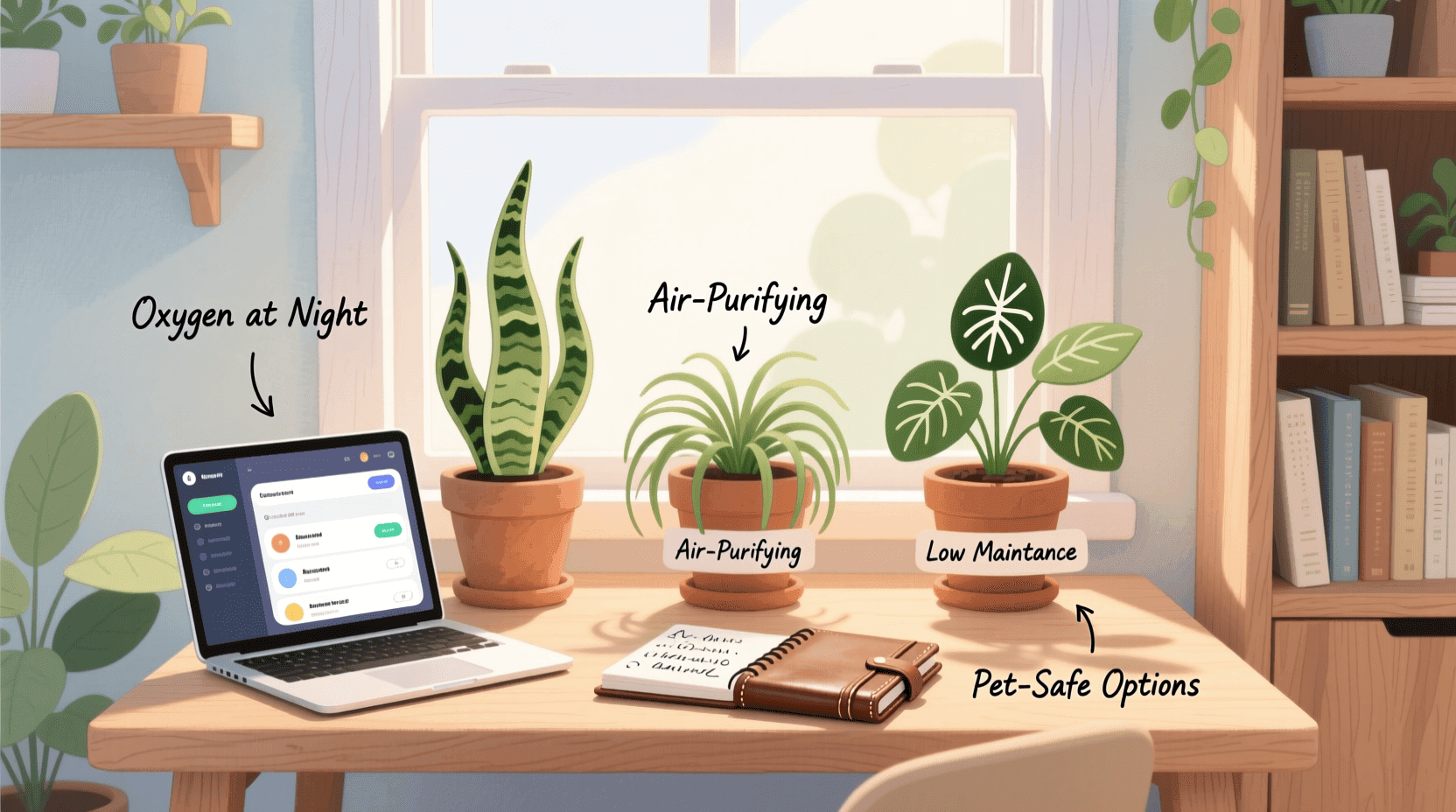
Your home office is more than a workspace—it’s where you create, focus, and sometimes struggle. Between deadlines, emails, and mental fatigue, it’s easy to feel drained. But what if your desk could help you recharge?
The best indoor plants for home offices don’t just look beautiful—they improve concentration, purify air, and reduce stress. As an urban horticulturist who’s designed green workspaces for remote teams, freelancers, and students, I’ll show you the 7 most effective, low-maintenance plants that turn your desk into a sanctuary of calm and clarity.
- Why Plants Belong in Home Offices
- Top 7 Best Indoor Plants for Home Offices
- Pet-Safe Choices for Cat & Dog Owners
- Care Tips for Busy Professionals
- Where to Place Plants in Your Office
- FAQ: Your Questions Answered
Why Plants Belong in Home Offices
Science confirms what gardeners have always known: plants make us feel better.
- Boost focus: A 2023 University of Exeter study found that office plants increase concentration by 15%.
- Reduce stress: Interacting with greenery lowers cortisol levels and heart rate.
- Cleaner air: NASA’s Clean Air Study shows certain plants remove formaldehyde, benzene, and trichloroethylene.
- Increase humidity: Reduces dry eyes, sore throats, and screen fatigue.
According to the Royal Horticultural Society, even one plant on your desk can significantly improve mood and cognitive performance during long workdays.
Top 7 Best Indoor Plants for Home Offices
1. Snake Plant (Sansevieria trifasciata)
Why it’s perfect: Releases oxygen at night—ideal for late-night work.
Air purification: Removes formaldehyde, benzene, and xylene.
Light needs: Low to bright indirect.
Watering: Every 4–6 weeks.
Pet-safe?: No—mildly toxic to cats and dogs.
2. Spider Plant (Chlorophytum comosum)
Why it’s perfect: NASA’s #1 air-purifying plant; removes 90% of formaldehyde.
Light needs: Bright indirect.
Watering: Every 1–2 weeks.
Pet-safe?: Yes—non-toxic and safe.
Style tip: Hang near your monitor or place on a shelf.
3. Peace Lily (Spathiphyllum)
Why it’s perfect: Increases humidity by up to 5% and purifies air.
Light needs: Low to medium indirect.
Watering: When leaves droop slightly.
Pet-safe?: No—toxic to pets.
Bonus: Blooms year-round in ideal conditions.
4. ZZ Plant (Zamioculcas zamiifolia)
Why it’s perfect: Thrives on neglect—perfect for forgetful workers.
Light needs: Low to bright indirect.
Watering: Every 3–4 weeks.
Pet-safe?: No—mildly toxic.
Best for: Dark corners or north-facing desks.
5. Pothos (Epipremnum aureum)
Why it’s perfect: Fast-growing, trailing, and purifies air.
Light needs: Low to bright indirect.
Watering: Every 1–2 weeks.
Pet-safe?: No—toxic if ingested.
Tip: Train along monitors or shelves for a green frame.
6. Cast Iron Plant (Aspidistra elatior)
Why it’s perfect: Survives low light, dry air, and irregular care.
Light needs: Low to medium.
Watering: Every 2–3 weeks.
Pet-safe?: Yes—non-toxic.
History: Grew in Victorian coal-heated parlors—truly unkillable.
7. Chinese Evergreen (Aglaonema)
Why it’s perfect: Bold, patterned leaves add visual calm.
Light needs: Low to medium indirect.
Watering: Every 1–2 weeks.
Pet-safe?: No—toxic to pets.
Warning: Keep out of reach if you have curious animals.
Pet-Safe Choices for Cat & Dog Owners
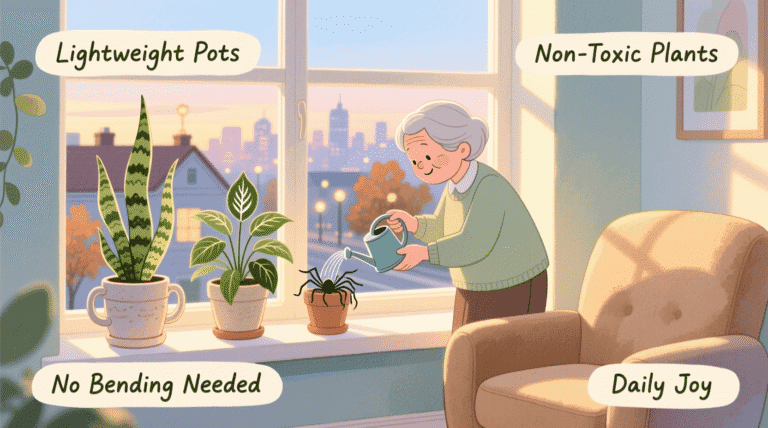
If you share your office with pets, choose non-toxic options:
- Spider Plant: Safe, air-purifying, and easy to grow.
- Cast Iron Plant: Nearly indestructible and pet-friendly.
- Parlor Palm: Elegant, safe, and thrives in low light.
Avoid snake plant, peace lily, pothos, and ZZ plant if your pet chews plants. See our guide to safe low-light plants.
Care Tips for Busy Professionals
Your office plant should support you—not add to your to-do list.
- Water less in winter: Heating dries air, but plants grow slower.
- Use self-watering pots: Ideal for long workdays or travel.
- Wipe leaves monthly: Dust blocks air-purifying ability.
- Group plants: Creates a microclimate that boosts humidity.
- Avoid over-fertilizing: Once every 2 months in spring/summer is enough.
Learn how to water correctly to avoid root rot.
Where to Place Plants in Your Office
- Next to your monitor: Spider plant or pothos soften harsh lines.
- On your bookshelf: Cast iron or ZZ plant in low-light zones.
- On your desk (small pots): Peace lily or Chinese evergreen in 4-inch pots.
- On the floor beside your chair: Snake plant or parlor palm for vertical greenery.
- Away from radiators: Dry heat stresses plants—keep at least 2 feet away.
FAQ: Your Questions Answered
Q: Can plants really improve my focus?
A: Yes! Studies show plants reduce mental fatigue and increase attention span.
Q: How many plants do I need for cleaner air?
A: NASA recommends 1–2 plants per 100 sq ft. For a desk, 1–2 small plants is ideal.
Q: Do plants cause allergies in offices?
A: Rarely. Choose non-flowering plants like snake plant or spider plant.
Q: Can I keep plants in a windowless office?
A: Yes—snake plant, ZZ plant, and cast iron plant thrive in low light.
Q: Are there plants that reduce screen glare?
A: Indirectly—greenery softens light and reduces eye strain.
Q: Should I talk to my office plants?
A: Why not? Gentle interaction reduces your stress—and they’ll thrive on your care.
Your home office doesn’t have to feel sterile or stressful. With the right plant, it becomes a space where clarity grows as easily as greenery. Where deadlines meet peace. Where you don’t just work—you thrive.
If this guide helped you design a calmer workspace, share it with a fellow remote worker. And tell us: which plant will sit beside your laptop?


I don’t think the title of your article matches the content lol. Just kidding, mainly because I had some doubts after reading the article.
Your point of view caught my eye and was very interesting. Thanks. I have a question for you.
I don’t think the title of your article matches the content lol. Just kidding, mainly because I had some doubts after reading the article.