How to Make Tap Water Safe for Sensitive Plants (No Filter Needed)
You’ve noticed it first on your peace lily — those telltale brown tips creeping along the edges of the leaves. Or maybe your calathea’s vibrant green has faded, or your fern seems perpetually thirsty despite regular watering.
Could it be the water?
For many indoor gardeners, the answer is yes. Tap water contains chemicals and minerals that, while safe for humans, can harm sensitive houseplants over time. The good news? You don’t need expensive filters or special equipment to make your water safe for plants.
In this guide, you’ll discover:
- What’s really in your tap water and why it affects certain plants
- Simple, effective methods to neutralize harmful elements
- Which plants are most vulnerable to water quality issues
- How to create your own “plant-safe” water with everyday household items
Because sometimes, the secret to thriving plants isn’t what you add — it’s what you remove.
💧 What’s Really in Your Tap Water?
Most municipal water supplies contain several elements that can affect sensitive plants:
Chlorine and Chloramine
Added to kill bacteria, these chemicals are generally harmless to humans but can damage plant roots over time. While chlorine evaporates naturally, chloramine (a more stable compound) does not.
According to the University of Massachusetts Amherst Extension, chloramine can interfere with beneficial soil microbes that help plants absorb nutrients.
Fluoride
Often added to prevent tooth decay, fluoride accumulates in soil and can cause tip burn on sensitive plants like spider plants, peace lilies, and dracaenas.
Hard Water Minerals
Calcium and magnesium create “hard water” that leaves white crust on soil surfaces and pot edges. While not immediately harmful, these minerals build up over time, altering soil pH and nutrient availability.
🔗 Source: University of Massachusetts Amherst – Water Quality and Houseplants
🌱 Which Plants Are Most Sensitive?
Not all plants react the same to tap water. Some are remarkably tolerant, while others show damage quickly.
Highly Sensitive Plants:
- Peace Lily (Spathiphyllum) → Brown leaf tips
- Calathea (Prayer Plants) → Crispy edges, yellowing
- Dracaena → Brown leaf margins
- Spider Plant → Brown leaf tips
- Ferns → Drying fronds, reduced growth
- Alocasia → Drooping, yellow spots
Tolerant Plants:
- Snake Plant
- ZZ Plant
- Pothos
- Philodendron
- Most succulents
If you notice brown tips, yellow spots, or slow growth on sensitive plants despite proper care, your water may be the culprit.
🛠️ How to Make Tap Water Safe for Plants (Without Filters)
You don’t need expensive equipment to create plant-safe water. Try these simple methods:
1. Let It Sit (For Chlorine Removal)
Fill a clean container with tap water and let it sit uncovered for 24–48 hours. Chlorine will evaporate naturally.
📌 Pro Tip: Use a wide-mouth container (like a pitcher or bucket) to increase surface area and speed evaporation.
⚠️ Note: This method doesn’t remove chloramine or fluoride.
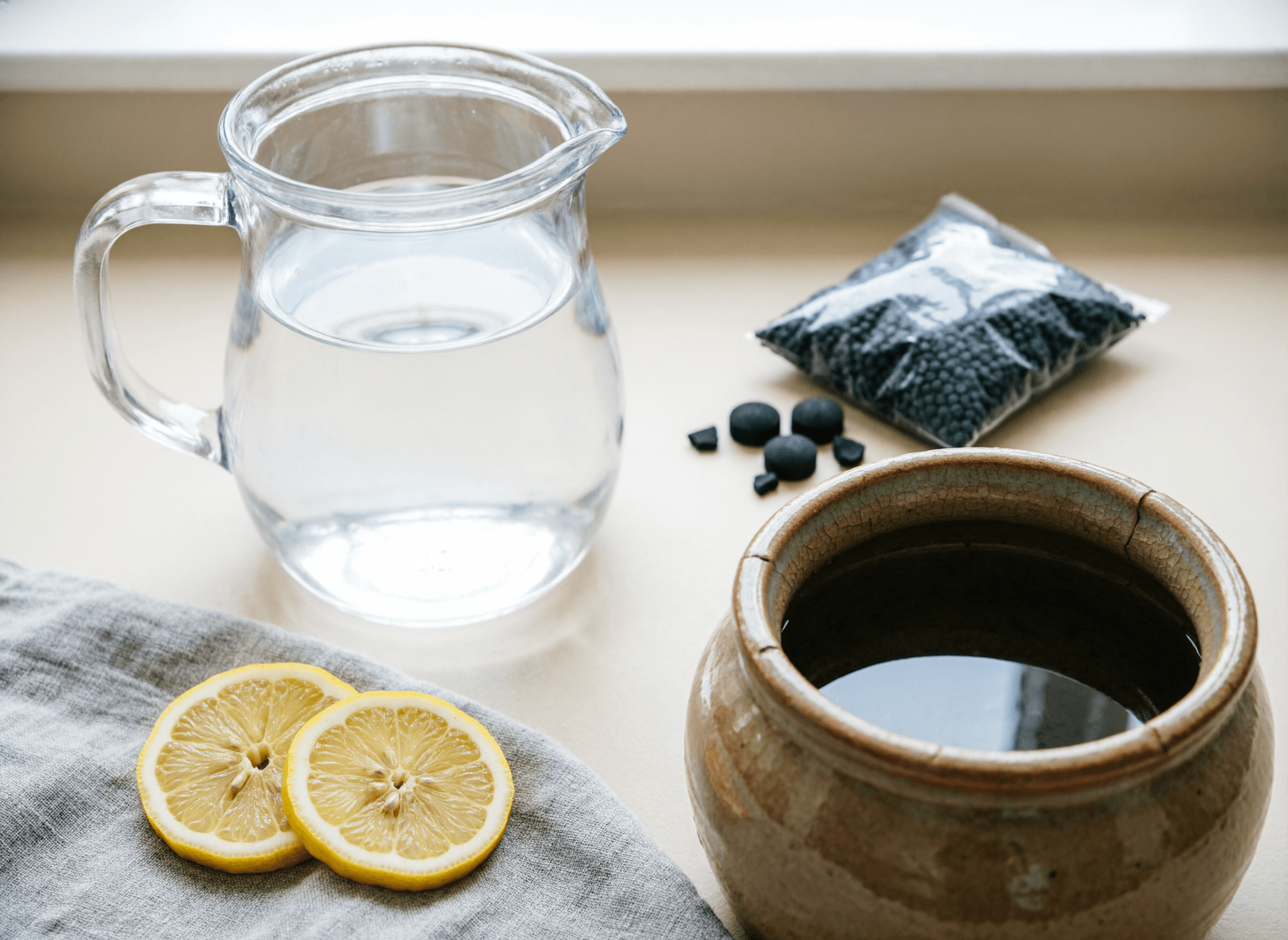
2. Add a Pinch of Activated Charcoal
Activated charcoal binds to chlorine, chloramine, and some heavy metals.
- Add 1/4 teaspoon of food-grade activated charcoal per gallon of water
- Let sit for 4–6 hours
- Strain through a coffee filter before using
This affordable solution works for both small and large quantities of water.
🌿 Internal Link: Perfect Watering Indoor Plants: Avoid Root Rot
3. Use Rainwater (When Available)
Rainwater is naturally soft and slightly acidic — perfect for most houseplants.
- Place clean containers outside during rain
- Cover with mesh to keep out debris
- Store in sealed containers away from sunlight
Rainwater contains beneficial nitrogen and lacks added chemicals. Just be sure to use it within 1–2 weeks to prevent algae growth.
4. Add Lemon Juice (For Hard Water)
The citric acid in lemon juice helps break down mineral deposits.
- Add 1 tablespoon of fresh lemon juice per gallon of water
- Let sit for 30 minutes before using
This small amount won’t affect soil pH significantly but will help neutralize hard water minerals.
5. Try the “Boil and Cool” Method
Boiling water drives off chlorine and some volatile compounds.
- Bring tap water to a rolling boil for 5 minutes
- Let cool completely before using
- Store in clean containers with tight lids
This method works well for small quantities but isn’t practical for frequent watering.
🌿 Alternative Water Sources You Might Already Have
Distilled Water
Available at grocery stores, distilled water is free of minerals and chemicals. While safe for plants, it lacks beneficial minerals too — use it mixed with tap water (50/50) for best results.
Aquarium Water
If you have a freshwater aquarium, the old water removed during cleaning is rich in beneficial nutrients from fish waste. It’s perfect for non-edible houseplants.
Dehumidifier Water
The water collected in your dehumidifier is essentially distilled — free of minerals and chemicals. Just be sure your dehumidifier is clean to avoid introducing mold.
🚫 What NOT to Do
- Don’t use softened water → Contains excess sodium that harms plants
- Don’t rely solely on filtered drinking water → Many filters don’t remove fluoride
- Don’t add too much lemon juice → Can make soil too acidic over time
- Don’t use hot tap water → Contains higher mineral concentrations
🌱 Creating a Watering Routine for Sensitive Plants
For the best results with water-sensitive plants:
1. Test Your Tap Water First
Contact your local water authority for a water quality report, or purchase an affordable home testing kit.
2. Prepare Water in Advance
Set up a weekly routine:
- Sunday evening: Fill containers with tap water
- Monday morning: Water plants with dechlorinated water
3. Use Bottom Watering
Place pots in a tray of prepared water for 20–30 minutes. This avoids wetting leaves and delivers water directly to roots.
4. Monitor Plant Response
Track changes in growth and leaf condition. If brown tips persist after 4–6 weeks of using treated water, consider repotting with fresh soil to remove mineral buildup.
🌿 Internal Link: Common Houseplant Problems: Diagnose and Fix
✅ Final Thought: Water as Ritual
In many cultures, water is sacred. It carries memory, intention, and life itself.
When you take time to prepare water thoughtfully for your plants, you’re not just removing chemicals — you’re creating a ritual of care.
Each time you let water sit, add a squeeze of lemon, or collect rain in a clean jar, you’re saying: I see you. I honor your needs.
So the next time you notice brown tips on your peace lily, don’t just reach for the watering can.
Pause. Prepare. Pour with intention.
Because sometimes, the most healing part of gardening isn’t what grows in the pot.
It’s what grows in you.