Best Air-Purifying Plants for Bedrooms (That Won’t Hurt Your Pet)

You close your bedroom door at night hoping for rest. But what if the air you’re breathing isn’t as clean as you think?
Indoor air can be 2–5 times more polluted than outdoor air — filled with dust, volatile organic compounds (VOCs) from furniture, and even particles from cooking. And when you’re sleeping, your body has less defense against these invisible intruders.
Adding the right air-purifying plant to your bedroom could make all the difference. But if you share your space with a curious cat or dog, you need more than just clean air — you need safety.
In this guide, you’ll discover:
- The best non-toxic plants that purify while you sleep
- How they actually remove toxins from the air
- Where to place them for maximum effect
- Why some “air-purifying” plants should never enter a pet-friendly bedroom
Because peace of mind shouldn’t come at the cost of your furry friend’s safety.
🌬️ Why Bedroom Air Quality Matters More Than You Think
While we sleep, our bodies enter a state of deep restoration. Lungs expand, cells regenerate, and the brain flushes out toxins. But if the air is polluted, this process becomes harder — leading to restless nights, morning fatigue, and even long-term health issues.
According to the U.S. Environmental Protection Agency (EPA), indoor air pollution is a growing concern — especially in tightly sealed modern homes. Common pollutants include:
- Formaldehyde (from furniture, carpets)
- Benzene (from plastics, detergents)
- Trichloroethylene (from paint, adhesives)
These compounds can cause headaches, dizziness, and respiratory irritation — often mistaken for seasonal allergies.
The good news? Certain houseplants naturally filter these chemicals through their leaves and roots, releasing cleaner oxygen back into the air.
🔗 Source: U.S. EPA – Indoor Air Quality Overview
But here’s the catch: many air-purifying plants are toxic to pets. The very plant meant to improve your health could harm your cat or dog if nibbled.
So how do you choose wisely?
🌱 Top 5 Air-Purifying Plants Safe for Pets
After reviewing NASA’s Clean Air Study and cross-referencing with the ASPCA Toxic and Non-Toxic Plants List, here are the safest, most effective options for pet-friendly bedrooms.
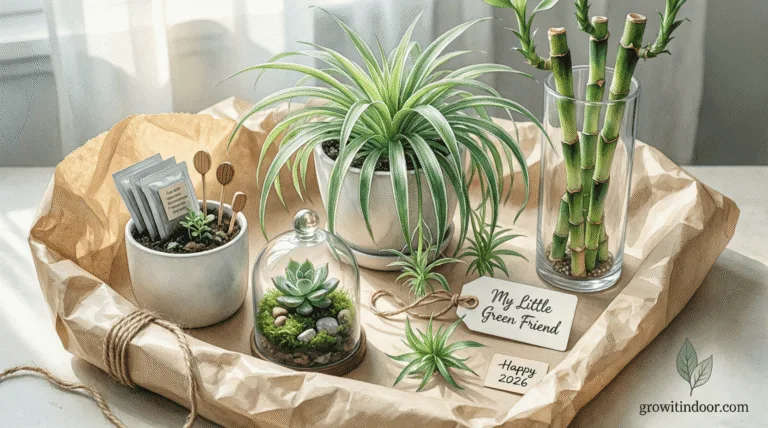
1. Spider Plant (Chlorophytum comosum)
- Air purification power: Removes formaldehyde, xylene, and toluene
- Why it’s perfect for bedrooms: Thrives in low light, produces “pups” that dangle safely away from curious noses
- Pet safety: Completely non-toxic to cats and dogs
- Care tip: Hang in a macramé hanger near a window for gentle air movement
This plant is so safe that some believe it actually attracts cats away from more dangerous plants — giving them something harmless to chew.
🌿 Internal Link: Pet-Safe Houseplants: Non-Toxic Plants for Cats & Dogs
2. Parlor Palm (Chamaedorea elegans)
- Air purification power: Filters formaldehyde and benzene
- Why it’s perfect for bedrooms: Grows slowly, compact size fits nightstands, releases oxygen at night
- Pet safety: Non-toxic and rarely chewed due to fibrous texture
- Care tip: Mist leaves weekly to boost humidity and air-cleaning ability
Unlike many palms, the Parlor Palm is one of the few safe for cats — making it ideal for shared sleeping spaces.
3. Areca Palm (Dypsis lutescens)
- Air purification power: Excellent at removing xylene and toluene
- Why it’s perfect for bedrooms: Acts as a natural humidifier, releasing moisture into dry air
- Pet safety: Non-toxic (unlike Sago Palm, which is highly toxic)
- Care tip: Place near a bright window but out of direct sun
While larger than the Parlor Palm, it’s worth the space — studies show it’s one of the most effective natural humidifiers among houseplants.
4. Calathea (Various Species)
- Air purification power: Absorbs airborne chemicals through velvety leaves
- Why it’s perfect for bedrooms: Known as “prayer plants” for their rhythmic leaf movement at night — calming to watch
- Pet safety: Non-toxic and unappealing to pets
- Care tip: Keep soil consistently moist but not soggy
These plants thrive in the higher humidity of bathrooms, but also do well in bedrooms with regular misting.
5. Boston Fern (Nephrolepis exaltata)
- Air purification power: One of the best at removing formaldehyde
- Why it’s perfect for bedrooms: Trailing fronds add softness and movement to quiet spaces
- Pet safety: Non-toxic and rarely chewed
- Care tip: Hang in a basket where pets can’t easily reach
Ferns are especially effective in dry climates — they naturally pull moisture from the air and release it back cleaner.
🔗 Source: NASA Clean Air Study – Final Report
🚫 Plants to Avoid in Pet-Friendly Bedrooms
Some popular “air-purifying” plants are dangerously toxic:
| Plant | Risk to Pets | Symptoms |
|---|---|---|
| Peace Lily | Severe | Oral irritation, drooling, difficulty swallowing |
| Snake Plant | Mild | Nausea, vomiting (especially in cats) |
| Aloe Vera | Moderate | Lethargy, diarrhea |
| ZZ Plant | Moderate | Mouth irritation, vomiting |
| English Ivy | Severe | Breathing difficulties, fever |
When in doubt, always check the ASPCA database before bringing a new plant into your home.
🔗 Source: ASPCA – Toxic and Non-Toxic Plants List
🛏️ How to Place Plants for Maximum Benefit
Airflow matters as much as the plant itself.
Near Your Bed, But Not Too Close
Place plants 3–5 feet from your head — close enough to benefit from air circulation, but far enough to avoid accidental contact during sleep.
On Nightstands or Shelves
Elevated positions help plants capture more airborne particles. Avoid placing directly on the floor where dust accumulates.
In Clusters of 2–3
Grouping plants creates a microclimate that boosts humidity and air exchange — but keep them spaced so air can flow between them.
Rotate Seasonally
Move plants closer to windows in winter when light is weaker, and slightly back in summer to avoid direct sunburn.
❌ What NOT to Do
- Don’t use scented candles or essential oils alongside plants → creates chemical competition
- Don’t place toxic plants out of reach → curious pets jump higher than you think
- Don’t overwater → damp soil attracts mold and fungus gnats
- Don’t ignore dust buildup → wipe leaves weekly for better air filtration
✅ Final Thought: Breathe Easier, Sleep Deeper
Your bedroom should be a sanctuary — not just for rest, but for renewal.
And sometimes, the quietest form of healing grows in a pot.
Choose plants that purify the air and protect your peace. Let them breathe with you through the night, filtering toxins while you dream.
Because true safety isn’t just about what you keep out.
It’s about what you invite in.