Mental Health & Houseplants: How Caring for Green Life Reduces Anxiety
In a world of constant noise — notifications, deadlines, endless scrolling — our minds crave stillness.
And sometimes, the quietest form of healing grows in a pot.
More people are discovering that caring for houseplants isn’t just a hobby — it’s a gentle act of mindfulness. A daily ritual that grounds us, slows us down, and reminds us to breathe.
This January, instead of chasing productivity, what if you chose presence?
In this guide, you’ll discover:
- The science behind plants and mental well-being
- Simple plant-care rituals to reduce anxiety
- Best low-maintenance plants for emotional balance
- Why nurturing green life helps heal inner life
Let’s grow calm — one leaf at a time.
🧠 Why Plants Soothe the Mind
We’re not born to live under fluorescent lights and concrete skies. We evolved with nature — and our brains still respond to greenery.
According to a 2025 study by the University of Copenhagen, interacting with indoor plants reduces cortisol levels, improves focus, and increases feelings of safety and control.
Even passive contact — like looking at a thriving monstera — can lower heart rate and ease stress.
Why?
- Caring distracts from rumination
- Rhythmic tasks (watering, wiping leaves) become meditative
- Growth is visible proof of consistency
As one participant said:
“When my plant gets a new leaf, I feel like I’ve done something right.”
🔗 Source: University of Copenhagen – Nature & Mental Resilience Study
🌱 5 Low-Effort Plants That Support Calm
Choose plants that thrive on neglect — so you never feel guilty for missing a day.
1. ZZ Plant (Zamioculcas zamiifolia)
- Survives months without water
- Symbolizes resilience
- Perfect for dark corners or offices
2. Snake Plant (Sansevieria trifasciata)
- Releases oxygen at night → better sleep
- Purifies air (removes formaldehyde, benzene)
- Tolerates dry air and irregular care
3. Pothos (Epipremnum aureum)
- Trails beautifully from shelves
- Grows faster than your mood dips
- Easy to propagate and share
4. Cast Iron Plant (Aspidistra elatior)
- As tough as its name suggests
- Ideal for beginners or busy lives
- Adds soft green texture anywhere
5. Spider Plant (Chlorophytum comosum)
- Produces “pups” — symbols of growth
- Safe for cats and dogs
- Loves bright indirect light
🌿 Internal Link: Pet-Safe Houseplants: Non-Toxic Plants for Cats & Dogs
🌀 Daily Rituals to Turn Care into Calm
You don’t need hours. Just moments.
Try these micro-practices:
1. The 60-Second Check-In
Each morning, pause beside one plant. Ask:
- Is the soil dry?
- Any new growth?
- How do I feel today?
It takes less than a minute — but builds awareness.
2. Watering as Meditation
Slow down. Pour gently. Feel the rhythm. Breathe in… pour… breathe out.
Turn a chore into a breathwork session.
3. Name Your Plant
Give it a meaningful name: “Peace,” “Patience,” or “Stillness.”
It deepens connection — and makes care feel personal.
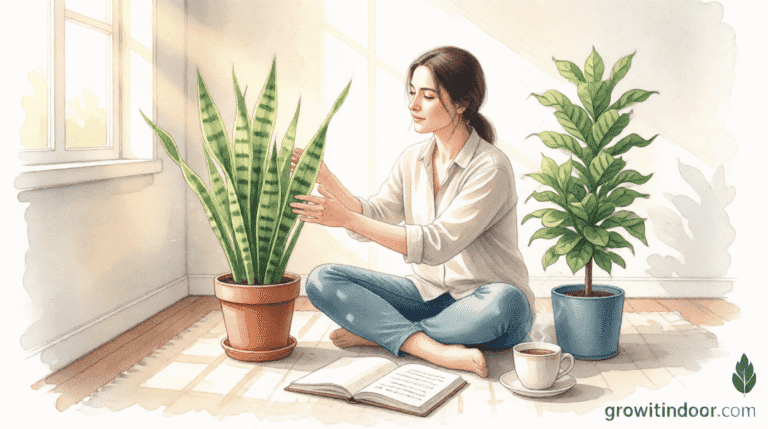
4. Touch the Leaves
Gentle physical contact releases calming neurotransmitters.
Yes — touching your snake plant is good for your brain.
💡 Recommended Product: Lechuza Self-Watering Planter
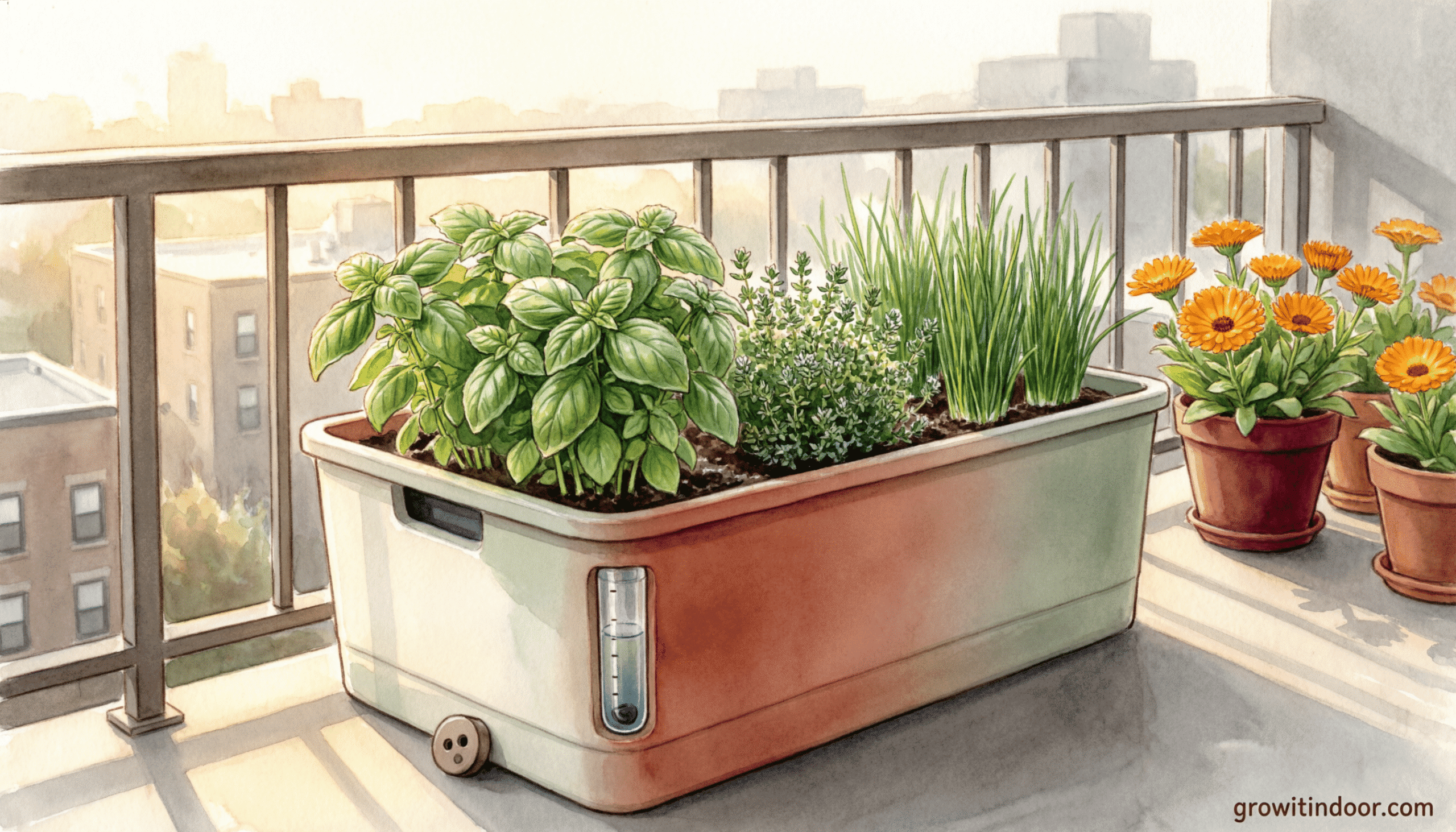
If forgetfulness adds stress, try a self-watering planter.
My favorite? The Lechuza Classico 8″ Self-Watering Pot.
It holds up to 4 weeks of water — perfect for travel, burnout days, or chaotic weeks.
The built-in water level indicator lets you relax. No guesswork. No guilt.
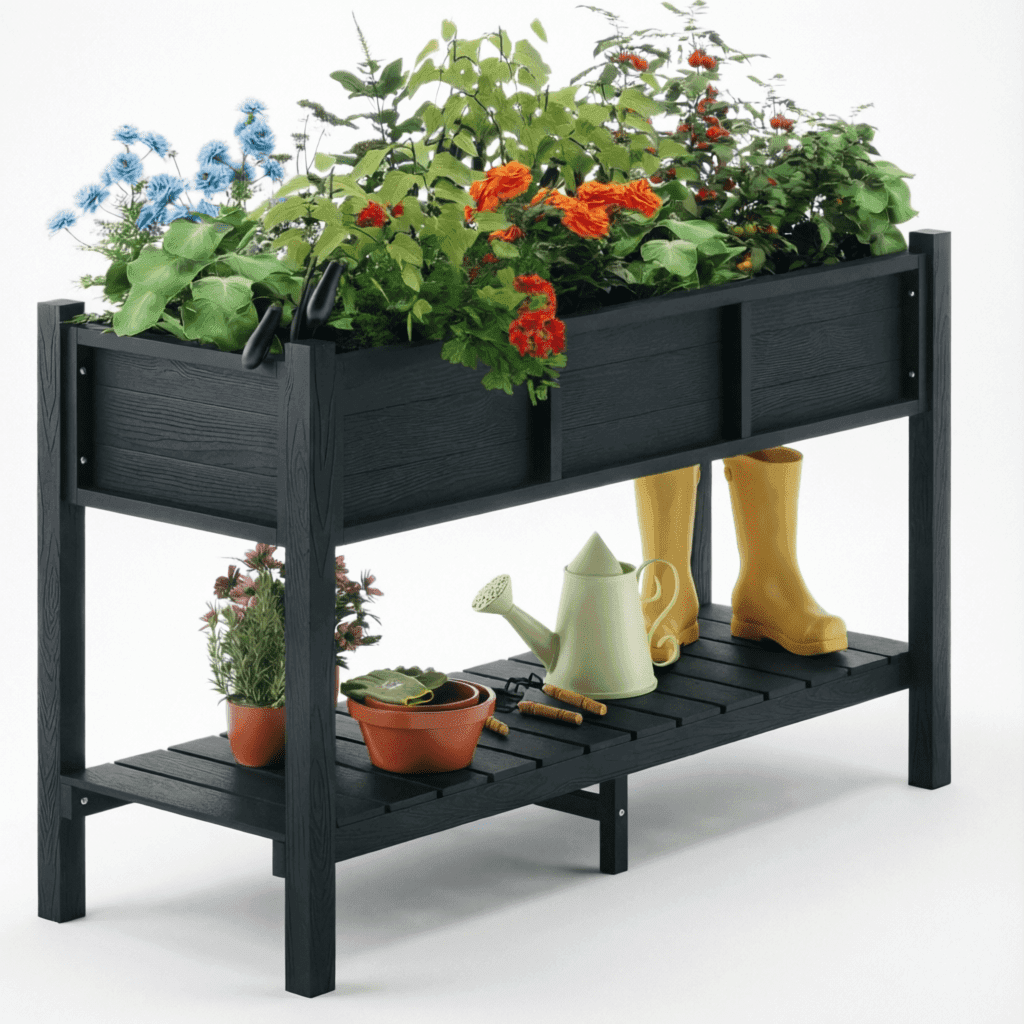
Keter Urban Bloomer 12.7 Gallon Raised Garden Bed and Outdoor Herb Garden Planter with Self Watering Gauge and Drainage Plug, Dark Grey
❌ What Plants Can’t Do
Let’s be honest: no plant will cure clinical anxiety, replace therapy, or fix burnout.
But they can:
- Offer a moment of pause
- Serve as a breathing anchor
- Provide visual progress when everything else feels stuck
They won’t solve everything — but they’ll stay with you through it.
✅ Final Thought: Growth Is Never Wasted
Sometimes, nothing changes for weeks.
The soil stays dry.
No new leaf appears.
Life feels heavy.
And still — you show up.
You wipe a dusty leaf.
You refill the reservoir.
You whisper, “We’re doing okay.”
That’s not small.
That’s courage.
Because real healing doesn’t always bloom loud.
Sometimes, it unfolds quietly —
in the silence between waterings,
in the shadow of a strong stem,
in the way a single leaf turns toward the light.
Let your garden be your mirror.
And let every small act of care remind you:
You are growing too.