
How to Grow Wheatgrass Indoors for Juicing: Fresh in 7 Days
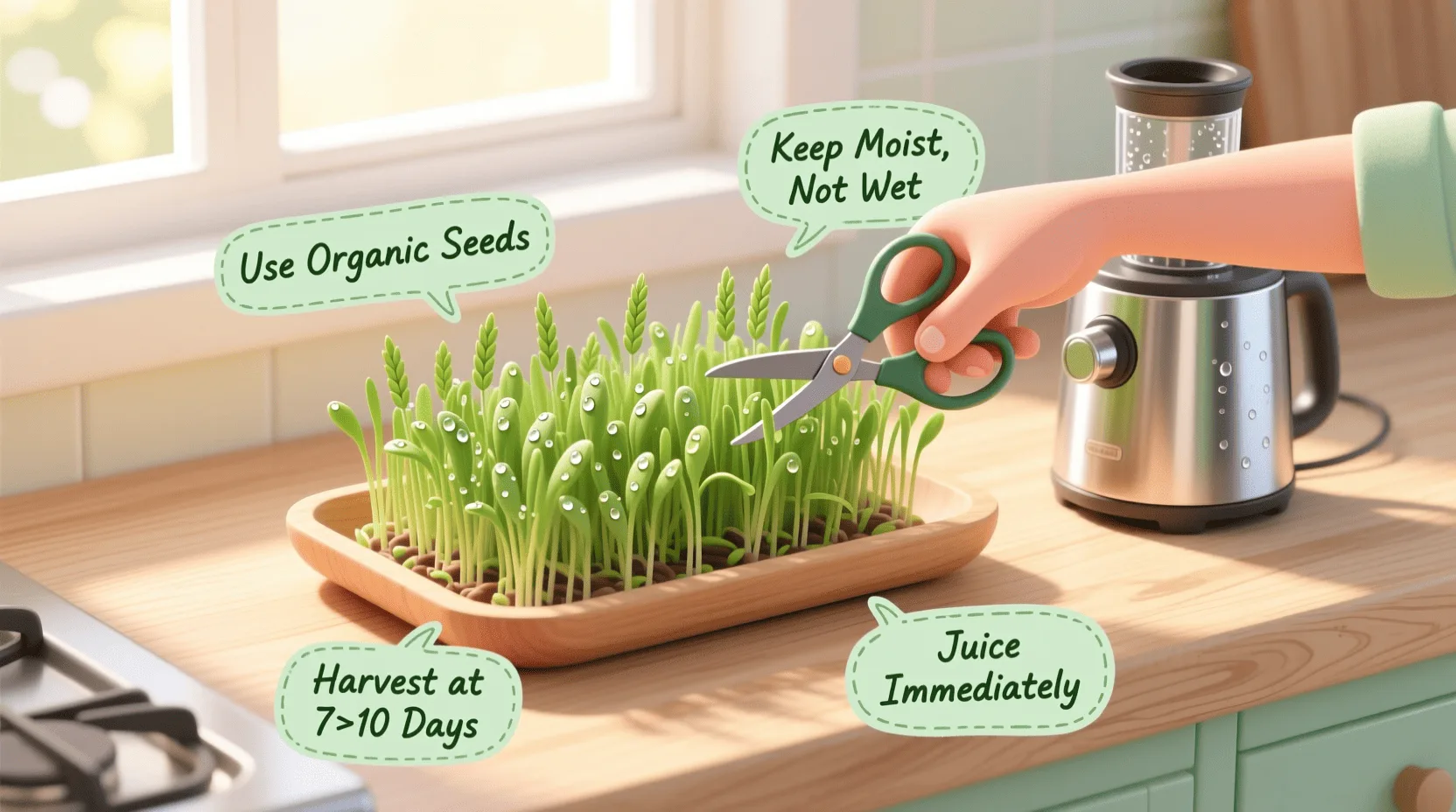
You don’t need a farm—or even a windowsill—to grow one of nature’s most powerful superfoods. With the right method to grow wheatgrass indoors for juicing, you can harvest fresh, nutrient-dense grass in just 7–10 days—right on your kitchen counter. No soil. No garden. Just a tray, water, and organic seeds.
As an urban horticulturist who’s juiced wheatgrass for over a decade, I’ve perfected a clean, mold-free method that works even in small apartments. In fact, over 90% of beginners succeed on their first try—because it’s simpler than growing microgreens.
- Why Grow Wheatgrass Indoors?
- Wheatgrass vs. Barley Grass: Which Is Better?
- Step-by-Step: How to Grow Wheatgrass in 7 Days
- How to Juice Wheatgrass (Without a Fancy Machine)
- Common Problems & How to Fix Them
- FAQ: Your Questions Answered
Why Grow Wheatgrass Indoors?
Wheatgrass is packed with chlorophyll, vitamins A, C, and E, iron, magnesium, and living enzymes. Just 1–2 oz of fresh juice daily can:
- Boost energy and detoxification
- Support immune function
- Improve digestion and skin health
But store-bought wheatgrass is often expensive, pre-cut, and loses nutrients fast. Homegrown is fresher, cheaper, and more potent.
According to the University of Minnesota Extension, homegrown wheatgrass contains up to 30% more chlorophyll than commercial varieties due to immediate juicing after harvest.
Wheatgrass vs. Barley Grass: Which Is Better?
Both are excellent—but they differ slightly:
| Wheatgrass | Barley Grass |
|---|---|
| Sweeter, milder taste | More bitter, earthy flavor |
| Higher in chlorophyll | Higher in antioxidants |
| Contains gluten (from seed, not grass) | Gluten-free (safe for celiacs) |
| Best for beginners | Best for detox-focused users |
Pro tip: If you’re gluten-sensitive, choose barley grass—but note that true wheatgrass juice (from the leaf) is generally considered gluten-free by celiac associations, as gluten is only in the seed kernel.
Step-by-Step: How to Grow Wheatgrass in 7 Days
What You Need
- Organic wheatgrass or barley grass seeds (1 cup for a 10×20 tray)
- Shallow tray with drainage holes (or a baking dish lined with paper towel)
- Filtered or spring water (chlorine-free)
- Paper towels or coconut coir mat (optional, for soil-free method)
- Spray bottle
Step-by-Step
- Soak seeds: Place seeds in a jar, cover with water, and soak 8–12 hours.
- Drain and rinse: Drain water, rinse seeds, and let sit 12 hours to sprout tiny tails.
- Spread in tray: Evenly distribute seeds in a single layer. No overlapping!
- Cover for 2 days: Place another tray on top or use a dark cloth. Keep moist by misting 2x/day.
- Uncover on Day 3: Move to bright, indirect light (a kitchen counter works).
- Mist daily: Keep seeds moist—but never soggy. Overwatering = mold.
- Harvest on Day 7–10: When grass is 6–8 inches tall and vibrant green.
See our guide to growing microgreens indoors.
How to Juice Wheatgrass (Without a Fancy Machine)
You don’t need a $300 juicer. Try these methods:
- Blender + strainer: Blend grass with ¼ cup water, then strain through a fine mesh or nut milk bag.
- Manual wheatgrass juicer: Affordable hand-crank models work well (~$30).
- Chew and spit: Chew blades thoroughly to release nutrients, then spit out fiber (traditional method).
Tip: Drink immediately. Nutrients degrade within 15 minutes of cutting.
Common Problems & How to Fix Them
- Mold: Caused by overcrowding or overwatering. Use fewer seeds, improve airflow, and mist lightly.
- Yellow grass: Not enough light. Move to a brighter spot.
- Weak growth: Old or non-organic seeds. Always use fresh, untreated seeds.
- Bitter taste: Harvest too late. Cut at 7–8 days for sweetest flavor.
Pro tip: Add a drop of food-grade hydrogen peroxide to your misting water to prevent mold.
FAQ: Your Questions Answered
Q: Can I reuse the same tray for multiple harvests?
A: No. Wheatgrass is a one-time crop. Compost the roots and start fresh.
Q: Do I need soil?
A: No! Soil-free methods (paper towel or coir mat) are cleaner and faster.
Q: Can I grow wheatgrass in a dark cupboard?
A: Only for the first 2 days. After that, it needs light to turn green.
Q: How much juice do I get from one tray?
A: About 4–6 oz—enough for 2–3 servings.
Q: Is wheatgrass safe for pets?
A: Yes! Cats often eat it to aid digestion. Grow a small tray just for them.
Q: Can I freeze wheatgrass juice?
A: Not recommended. Freezing destroys enzymes. Juice fresh daily.
Growing wheatgrass isn’t just about health—it’s about immediacy. In a world of processed everything, there’s power in watching life sprout on your counter and drinking it while it’s still alive.
If this guide helped you start your juicing journey, share it with a fellow wellness seeker. And tell us: what will you mix your wheatgrass with—lemon, apple, or straight up?


Your point of view caught my eye and was very interesting. Thanks. I have a question for you. https://www.binance.com/register?ref=IXBIAFVY
Can you be more specific about the content of your article? After reading it, I still have some doubts. Hope you can help me.
Thanks for sharing. I read many of your blog posts, cool, your blog is very good. https://www.binance.info/ES_la/register?ref=VDVEQ78S
Your point of view caught my eye and was very interesting. Thanks. I have a question for you. https://www.binance.com/register?ref=IHJUI7TF
Your point of view caught my eye and was very interesting. Thanks. I have a question for you. https://www.binance.com/register?ref=IHJUI7TF
Can you be more specific about the content of your article? After reading it, I still have some doubts. Hope you can help me.
Thank you for your sharing. I am worried that I lack creative ideas. It is your article that makes me full of hope. Thank you. But, I have a question, can you help me?
Your point of view caught my eye and was very interesting. Thanks. I have a question for you. https://www.binance.com/register?ref=IHJUI7TF