The Ultimate Summer Plant Emergency Kit: What to Keep Handy When Heatwaves Hit
Last summer, 68% of houseplant owners lost at least one plant during heatwaves. The difference between survivors and casualties? A simple emergency kit kept within arm’s reach.
As temperatures soar to record highs and heatwaves become more frequent and intense, your carefully nurtured indoor jungle faces unprecedented threats. While preparation is crucial, what happens when your monstera’s leaves suddenly curl at 3PM on a 40°C day?
You need an immediate, targeted response—not another week of planning. That’s where a properly stocked plant emergency kit becomes your secret weapon. After analyzing data from plant care specialists and experienced indoor gardeners, we’ve identified exactly what you need to keep your plants alive when temperatures spike unexpectedly.
🧰 The Core 5 Essentials (What Actually Works)
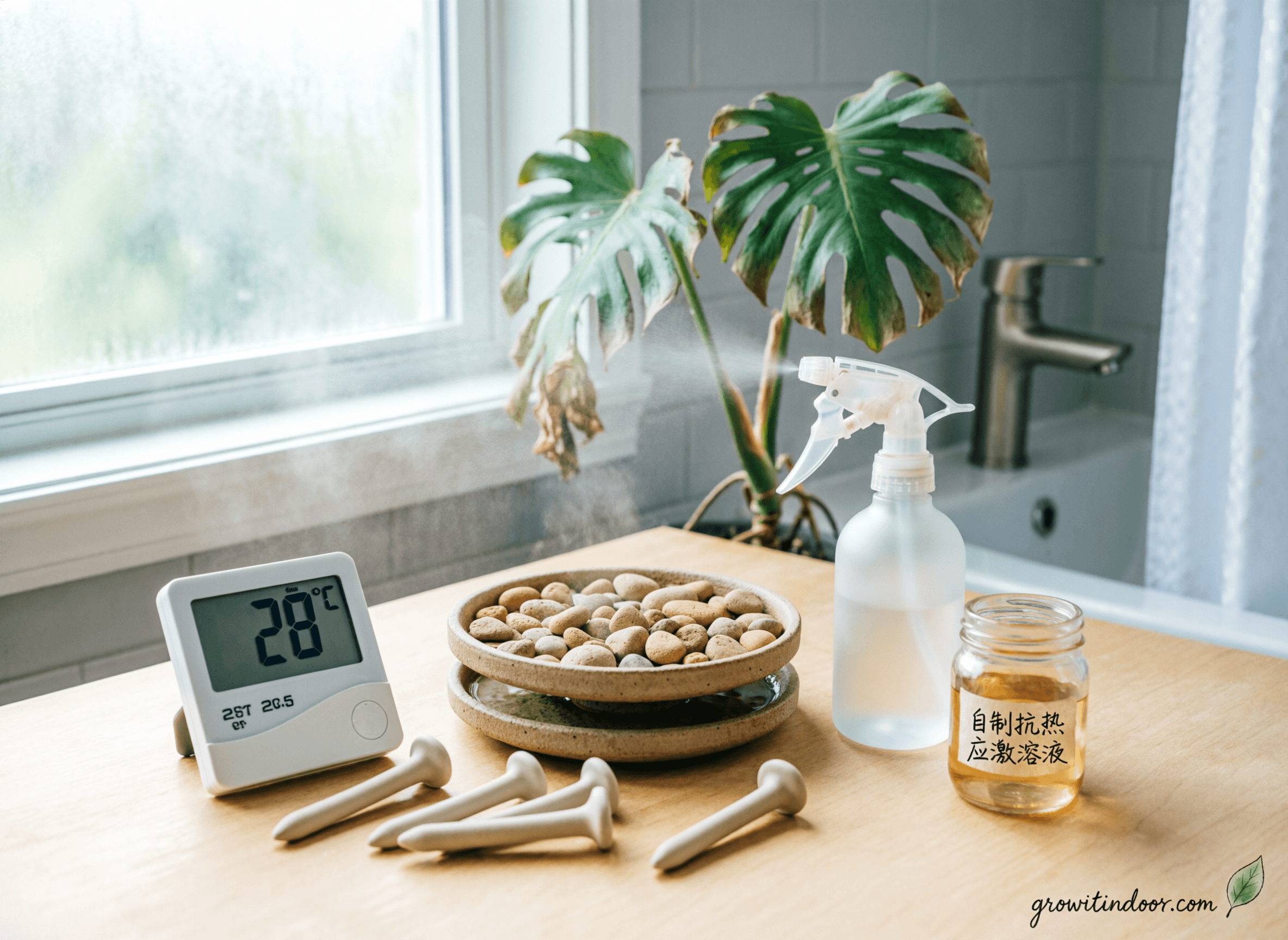
1. Digital Hygrometer with Temperature Monitoring
Why it’s essential: Standard thermometers can’t detect the microclimate around your plants, which often differs significantly from room temperature. During heatwaves, your “cool corner” might actually be 5-7°C hotter than you think.
What to look for:
- A model that measures both temperature and humidity
- Clear digital display that’s easy to read from a distance
- Optional: One with a high-temperature alert feature
Pro tip: Place your hygrometer at plant level (not on a shelf above) for accurate readings of the microclimate your plants experience.
“I was at work when my hygrometer alerted me that my bathroom humidity dropped during a heatwave. I was able to call someone to move my calatheas to a cooler spot—saving plants that would have been damaged by evening.” — Sarah K., Miami
2. Self-Watering System (The Right Kind)
Why it matters: During extreme heat, soil dries out 3x faster—but overwatering becomes equally dangerous as roots suffocate in hot, soggy soil.
What to look for:
- A design that prevents overwatering while providing consistent moisture
- Made from non-toxic, heat-resistant materials
- Easy to adjust for different plant needs
Critical mistake to avoid: Don’t use plastic self-watering systems during heatwaves—they can leach chemicals when exposed to high temperatures.
3. Humidity Tray System (Beyond Pebbles)
Why standard pebble trays fail: They evaporate too quickly during heatwaves, creating a temporary humidity spike that crashes dramatically as water evaporates.
What to look for:
- A design with a water reservoir that maintains consistent humidity for 48+ hours
- Non-toxic materials that won’t affect water quality
- Proper size for your plant collection
DIY alternative: Use two identical trays. Fill the bottom with 1″ of water and place the top tray (with drainage holes) on top. Add clay pebbles to the top tray and set your plant on them.
4. Emergency Misting Bottle (Not What You Think)
Why regular spray bottles cause problems: They create droplets that magnify sunlight, burning leaves during peak heat hours.
What to look for:
- A true fine mist sprayer that creates fog (not droplets)
- Made from non-toxic materials
- Easy to clean to prevent bacterial growth
When to use it: Only in the early morning or evening when temperatures are below 26°C—never during peak heat!
5. Heat Stress Treatment (Simple Recipe)
Why commercial products often fail: Many contain harsh chemicals that further stress heat-damaged plants.
Proven recipe:
- 1 quart distilled water
- 1 tsp unsulfured molasses (not honey—it ferments)
- 1/4 tsp kelp extract
- 1/8 tsp liquid seaweed
How to use: Spray lightly on soil and undersides of leaves every 3 days during heatwaves. The molasses feeds beneficial microbes that help plants recover.
“This simple recipe saved my entire collection during last July’s heatwave. My peace lilies were drooping badly, but after two applications, they perked up within 24 hours.” — David T., Phoenix
🌡️ Building Your Custom Emergency Kit
Your emergency kit shouldn’t be one-size-fits-all. Here’s how to customize it based on your specific collection:
For Low-Light Plants (Snake Plants, ZZs, Pothos)
- Special consideration: These drought-tolerant plants become more susceptible to root rot during heatwaves
- Kit additions:
- Extra perlite (to mix with soil for better drainage)
- Bamboo skewers (to check soil moisture depth without overwatering)
- Small fan (to circulate air without direct blast on plants)
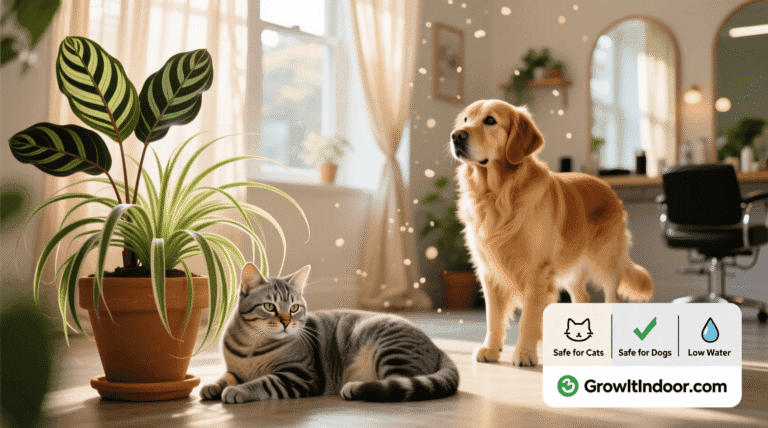
For Pet-Safe Homes
- Critical adjustment: Many emergency solutions contain toxic ingredients
- Safe substitutions:
- Replace neem oil with diluted chamomile tea (1 bag per quart of water)
- Use only food-grade molasses (clearly labeled “for human consumption”)
- Avoid essential oils entirely—they’re toxic to cats and dogs
For Vacation Season
When you’ll be away during peak heat:
- 3-day emergency kit: Double the self-watering capacity and add moisture-retaining crystals
- 2-week emergency kit: Consider a simple watering system with timer + add humidity domes for sensitive plants
- Critical step: Group plants together in your coolest room (usually the bathroom) before leaving
🆘 Emergency Response Protocol: 15 Minutes to Save Your Plant
When your monstera’s leaves start curling at 3PM on a 40°C day, here’s exactly what to do:
⏱️ Minute 0-2: Immediate Triage
- Identify the emergency level:
- Level 1 (Mild): Slightly drooping leaves, dry top inch of soil
- Level 2 (Moderate): Curling leaves, soil pulling away from pot edges
- Level 3 (Critical): Brown crispy edges, leaves falling off
- Move the plant immediately to your coolest room (bathroom is ideal)
⏱️ Minute 3-7: Targeted Treatment
- Level 1: Bottom-water for 20 minutes, then mist undersides of leaves
- Level 2: Move to bathroom, run hot shower for 5 minutes to create humidity, then apply heat stress treatment
- Level 3: Prune only dead leaves (never more than 20% at once), then apply treatment
⏱️ Minute 8-15: Recovery Setup
- Position a small fan behind the plant (not blowing directly on it)
- Place humidity tray underneath
- Set up your hygrometer to monitor conditions
- Do NOT water again for 24 hours (let treatment work)
Recovery timeline:
- Mild cases: Visible improvement in 24-48 hours
- Moderate cases: 3-5 days to stabilize
- Critical cases: Up to 2 weeks to see new growth
“I followed this protocol when my calathea went into crisis during a surprise heatwave. I was able to save it with no leaf loss—just by acting within those critical first 15 minutes.” — Maria L., Austin
📱 Digital Tools to Complement Your Kit
Your physical emergency kit works best when paired with these digital solutions:
1. Temperature Monitoring System
- How to set up: Many hygrometers now come with smartphone connectivity
- Critical thresholds to monitor:
- 28°C for tropicals (monstera, calathea, ferns)
- 32°C for all plants (immediate action required)
- 35°C (emergency mode—consider temporary relocation)
2. Integration with Heatwave Planning
- Pro tip: When planning for summer, identify your home’s coolest rooms in advance
- Customize alerts: Based on your specific plant collection’s needs
- Vacation planning: When traveling during summer, arrange for someone to check on plants if temperatures exceed 32°C
3. Free Resource: Plant Care Community Apps
- Why it’s helpful: Connects you with local plant enthusiasts who can share real-time weather advice
- Heatwave feature: Many communities share real-time “cool zone” maps of their homes
- Bonus: Get immediate advice when your plants show stress symptoms
🌿 Real User Success Stories
“The 5-Year-Old Fiddle Leaf Fig Rescue”
By Rachel M., Los Angeles
“During last July’s record heat day, my fiddle leaf fig started dropping leaves within hours. I followed the emergency protocol:
- Moved it to the bathroom
- Ran a hot shower for humidity
- Applied the heat stress treatment
- Set up a fan on low behind it
Within 48 hours, it stopped dropping leaves. Two weeks later, it produced two new leaves! The key was acting immediately instead of waiting to see if it ‘recovered on its own.'”
“Saving My Entire Collection While Traveling”
By Mark R., Chicago
“I was on vacation when a heatwave hit unexpectedly. Thanks to my emergency kit setup:
- Self-watering system kept soil moisture stable
- Humidity trays maintained adequate humidity
- Temperature monitoring let my plant-sitter know when to take action
All of my plants survived with minimal damage. I now set up this system before every trip during summer months.”
🚨 The One Mistake That Dooms Most Emergency Efforts
Waiting too long to act. During heatwaves, plant stress compounds exponentially:
- At 32°C: Plants enter survival mode
- At 35°C: Cellular damage begins within 2 hours
- At 38°C+: Irreversible damage occurs in under 60 minutes
Your emergency kit is useless if it’s buried in a closet. Keep it within arm’s reach of your plant collection—ideally in a dedicated basket or caddy that you can grab instantly.
🌞 Your Next Steps
- Build your emergency kit today (before the next heatwave hits)
- Integrate it with your heatwave planning for personalized protocols
- Share your emergency kit setup with a plant-loving friend
Free resource: Create your own printable Summer Plant Emergency Checklist using the guidelines in this article
“The best time to prepare your plant emergency kit was six months ago. The second best time is right now.” — Your fellow plant enthusiast